

Crowdfunding is an increasingly popular option for any small business looking to raise money. It's one of the most accessible ways of financing a new idea or product. But launching a successful crowdfunding campaign isn’t as easy as setting up a page on Kickstarter or Indiegogo and waiting for the money to roll in.
In this guide, we’ll look at how to plan, prep, and launch a successful crowdfunding campaign, as well as how to transition your idea into an enduring, self-sustaining business once your campaign is over.

Free Webinar:
Marketing 101
Struggling to grow sales? Learn how to go from first day to first sale in this free training course.
What is crowdfunding?
Instead of seeking a large sum from a single source, like angel investors or a bank, crowdfunding raises small amounts of money from a large number of people—often in exchange for direct rewards—who want to see a project succeed.
The concept of reaching a fundraising goal through crowdfunding isn’t new, but over the past decade or so, online platforms like Kickstarter, Indiegogo, GoFundMe, and Crowdfunder have made the process of raising money online for a business, product, or charitable cause easy and accessible to everyone.
Crowdfunding sites can bring a new audience to your ecommerce business and product—one you might not have otherwise reached.
These sites serve as virtual matchmakers for entrepreneurs and backers and provide the structure and space to host your campaign and the ability to accept funding.
How the crowdfunding model works
Crowdfunding sites offer you a place to host your campaign, usually in exchange for a percentage of the money raised. Backers are given various “rewards” based on the level of funding they provide.

These rewards can include an exclusive promotional item, advance access to the product being supported, or some form of public recognition—the more funding offered, the better the reward. (Some campaigns offer equity in place of rewards, but in this guide, we’ll focus on the latter model.)
Most crowdfunding platforms require you to set a financial goal for your campaign, as well as a timeframe in which to reach that goal, usually between 30 and 90 days. Some will let you keep all of the money raised during a campaign, whether you meet your goal or not. Others, like Kickstarter, use an all-or-nothing model that returns funds to backers if your campaign falls short.
If your campaign is successful, you’ll be in an excellent position to transition into a sustainable business by leveraging the audience built through your crowdfunding efforts.
Types of crowdfunding
Projects that rely on crowdfunding or online fundraising generally fall into one of three main buckets:
- Equity. Equity crowdfunding gives contributors partial ownership of a business in exchange for the capital they provide. Some sites only allow you to sell shares of your business to accredited investors, who are people who meet a specific income level.
- Donation. Donation-based crowdfunding provides no financial rewards or incentives for backers, so it’s most often used for charitable purposes or by nonprofits. The fundraiser is not required to pay anything back to donors.
- Rewards. As covered above, any type of crowdfunding campaign that incentivizes contributors with rewards (but not a stake in the resulting business) upon completion can be considered rewards-based. We’ll mostly focus on this approach throughout the rest of our guide.
Crowdfunding benefits
Crowdfunding offers several valuable perks on top of being a great way to fundraise startup capital.
It validates your ideas
The more you know about the target market for the product or business you plan to launch, the more you’ll reduce your financial risk, and crowdfunding can be an excellent tool for conducting market research.
Pre-selling your product via a crowdfunding campaign helps validate your creative projects by giving you a solid answer to the question, “Will anyone buy this?” Manufacturing your product without any indication of how it will sell could cost you a significant amount of time and money if it turns out the demand for your idea isn’t strong.
Knowing people want what you’re selling allows you to plan and scale your business with confidence.
It helps build a following
Having a solid following before you ship your first product is a rare and significant advantage. When done properly, crowdfunding, especially when combined with social media and press coverage, can help you build a dedicated audience that, ideally, will stay with you as your business grows.
It’s a source of flexible funding
Securing financing can be both time consuming and difficult for many new small-business owners. Untested ideas or new business models may not appeal to conservative lenders, like banks, and while finding private investors to help raise funds is an option, you’ll usually need to give up a portion of ownership in exchange.
Running a successful fundraising campaign can be a big undertaking, but for many founders, it also can be easier and more rewarding than traditional methods.
Learn more: 20+ Small Business Lending Statistics You Need to Know Before Applying for Financing
How to crowdfund an idea
Decide on a product or cause
There aren’t many restrictions on what types of products or businesses can be crowdfunded, but the most successful projects tend to have a few key things in common:
- A specific product. If you look at the biggest crowdfunding success stories, you’ll find most of them focused on funding individual products, not stores. There’s a reason for that: backers tend to want to support tangible items, not broad ideas. For the best chance of success, seek backing for your best product. You can build a store later, after your initial idea has taken off.
- A targeted, niche audience. Create a product that fills a need or a gap, then find the market that craves it. Often, founders create products that solve a problem that exists in their own lives, like the founder of MindJournal did when he couldn’t find a journaling tool designed for what he needed. Develop a prototype that taps into those needs.
- Strong differentiation. To generate buzz and attract backers, your product has to be something that can’t be found elsewhere. Do your research to ensure your product is one of a kind.
Plan your campaign
Much of your crowdfunding campaign’s success will be determined by your marketing efforts. But there are other important elements you also need to plan, including your campaign’s timeline and the logistics of fulfilling backer rewards—not to mention making the transition to a sustainable long-term business after your campaign is done.
Funding goal
Your funding goal should be the minimum amount you need to create your product and fulfill rewards. Write down all your expenses, from raw materials to shipping tape, and research any big expenses you may have to account for. Add everything up, and now you have your goal.
Timelines
Shorter campaigns set a tone of confidence. They should be long enough that you have time to build interest and reach your biggest potential audience, but not so long that they become background noise. Seeing that a campaign has just a few days remaining creates a sense of urgency for potential contributors, motivating them to act now, rather than later.
Perk levels
Choosing and pricing your reward tiers are important strategic steps in the crowdfunding process. Offer a range of rewards that entice users to back your project or product. If buying the product itself is the core perk, include a few lower-priced options for people who just want to support you, and scale up to some exclusive high-end perks for backers with lots of money to spend. Here are some of the more common crowdfunding tiers:
- Acknowledgments. Public acknowledgment of backer support is a good entry-level perk. For a donation as small as $5, Dominion City, a Canadian brewery that funded its bottle shop through Kickstarter, published the names of all its backers in a full-page ad taken out in a local magazine.
- Branded swag. Backers often like the thrill of being an early adopter. Offer perks that help them show their pride in participating, such as branded stickers, t-shirts, or bags. These lower-priced perks are especially good reward options if your product cost is high.
- Product pre-orders. One of the most popular perks is early or discounted access to a product. This is the best way to validate demand. If most of your marketing materials are focused on the benefits of the product, you may see higher conversions on perks that act as pre-sales.
- Creative collaborations. These perks offer backers a role in your project or business. For example, if you’re creating a comic book, you might offer to draw a backer into one of the panels or base a character on them in exchange for a specific level of financial backing.
- Unique or exclusive experiences. Backers can be interested in perks that offer exclusive access to your brand, such as a one-on-one consultation or an invitation to an exclusive event. These experiences will cut into your working hours, so use them as higher-end rewards.
Price your perks in a way that’s sustainable for your business. If you’re offering a discounted price on your product in return for backing, make sure you understand the full cost of delivering that reward to a buyer, including shipping. If you’re offering one-on-one time, you need to limit the quantity of that reward so it doesn’t disrupt your day-to-day operations.
Production
Backers are usually your most understanding customers, because they know crowdfunding a product isn’t the same as buying one off the shelf. But that doesn’t mean they have zero expectations.
Before launching your campaign, you should have a solid, informed estimate of your production timeline. To build that estimate, consider the following:
- How many products do you plan to make? Producing one unit is different from producing 100, and producing 100 is different from producing 10,000.
- How long will production take on your ideal order size?
- How long will it take to receive your products from your manufacturer?
- How long will it take to fulfill your campaign rewards? (Use a shipping calculator to estimate the shipping times for different classes of mail.)
It helps to have your manufacturing or production process finalized before you begin your campaign. (Don’t forget to add in some additional flex time to account for unforeseen delays.)
Your timeline most likely will change as you proceed, but a well-thought-out estimate gives backers an idea of what to expect. If you do experience delays, notify your backers as soon as possible and provide an updated estimate.
Shipping and fulfillment
Before you launch your campaign and make promises to supporters, confirm that your manufacturer can ship to your location, especially if they’ve never delivered to your country before.
Also, be prepared to ship products en masse to your supporters. If 1,000 backers pre-order your product, that’s 1,000 orders you need to package and mail.
A bit of planning can go a long way in creating a smooth fulfillment process. Have you selected a carrier? Do you know the mail class and postage cost? Do you have a way to print labels? Have you taken international shipping into consideration? Keep these factors in mind as you set and price your reward levels and communicate timelines to backers.
Here are some additional resources to help you with your shipping strategy:
- The Beginner’s Guide to Ecommerce Shipping and Fulfillment
- Shopify Shipping Services: Offer Affordable and Convenient Shipping for You and Your Customers
Finances
Don’t underestimate the importance of knowing how to manage your income and expenses during and after your campaign, especially if you don’t have much experience with business finance. A good accountant can start you on the right foot by helping you optimize your campaign earnings and make the most of your taxes, expenses, and cash flow.
Every day during the first project, we were carefully tracking pledges and total quantities. Once the project had decisively “tipped” into funding, we began ordering materials and beginning work on rewards.
Also take a crowdfunding site’s platform fees into consideration when setting your fundraising goals. Some sites take upward of 5% of your funding total and 3%–5% payment processing fees if your product is funded.
Communication with funders
Your campaign’s funders are your earliest fans, supporters, and customers, so keep them up to date. Communicating frequently with them builds trust, inspires further support, and keeps them apprised of any unforeseen delays or complications. Most crowdfunding platforms have tools, such as an email newsletter, to help you inform backers of your progress throughout and after the campaign.
Some information you might want to relate in a newsletter could include:
- News about funding milestones
- Updates about the product development process
- Behind-the-scenes photos
- New products or product variants
- New or expanded reward tiers
- New stock available
- Thank you messages
Market and promote your crowdfunding campaign
Think of your crowdfunding campaign as an extended product launch. To make it successful, you’ll need to dedicate some serious time to marketing and public relations, both before and during your campaign.
Lead generation
The secret to launching a successful crowdfunding campaign involves investing heavily in pre-campaign lead generation. “Before your campaign launches, spend a significant amount of ad spend collecting leads who want to know when your product launches,” explains Justin Arakaki, Director of Crowdfunding at LaunchBoom.
Justin says pre-campaign lead generation serves two benefits:
- Having a great launch day that propels your campaign to the top of platforms trending charts, which drives extra free traffic
- Learning how to position your product best for the campaign and future ads
“When you’re generating leads, you can do tons of cheap testing and surveying to figure out what about your product customers actually like and prioritize, and test different features in ads and landing pages,” says Justin. “This information helps you organize the campaign and creative assets that prioritizes specific selling points and creates a better conversion rate when the campaign is actually live.”
Creating strong momentum during campaign launch can put you at the top page of your crowdfunding site, which can mean extra (i.e, free) customers you don’t pay anything for.
That’s the whole reason you pay platform fees in the first place: to get more eyes and revenue you don’t have to pay for with ad spend.
Marketing
There are a few key things you’ll need to convert visitors into backers: a compelling video, great product photos, social proof, and engaging campaign copy.
Video
A campaign video can be repurposed across multiple platforms, making it the cornerstone of your marketing efforts. Whether you’re DIY-ing your video or working with a professional team, make sure your script explains the following:
- Who you are. Tell potential backers about yourself and your experience.
- The story of your product. Describe how you came up with your idea, the current state of your product or business, why your product matters to you—and why it will matter to your target audience.
- Why you need support. Explain why you’re raising money via crowdfunding and how that money will be spent. Make sure to include a direct ask for support.
- The rewards being offered. Include an overview of your most interesting rewards or the ones you feel will be most appealing to backers.
Keep short attention spans in mind—your video should be no more than two to three minutes long and hit your key points quickly.
If you’re planning to DIY your campaign video, here’s a guide to help you get started.
Visual Assets
The quality of your product shots can make or break a conversion with potential backers, so it’s important to make sure yours looks professional.
Here are some resources to help you take your own photos, no matter your budget:
- A Picture Is Worth a Thousand Sales: A DIY Guide to Beautiful Product Photography
- A 6-Step Guide to Natural Lighting for DIY Product Photography
- Free Course: Product Photography for Ecommerce
Photos can show off more than just your prototype and its specifications. Include other visuals to help backers get a sense of your brand as a whole, such as behind-the-scenes shots of your campaign in action and photos that demonstrate the progress you’ve made so far.
By giving potential backers an insider’s view, you’ll create a sense of connection to your team and your process.
Social proof
Including social proof on your landing page can help build credibility for your campaign. “Crowdfunding is a very innovative space by nature,” says Justin, “and a lot of these new products and entrepreneurs don’t have customer reviews, brand equity, or any proven track record to show they’ll deliver a great product.”
Justin has found the following are the agency’s highest performing creative assets:
- Product reviews from trusted third-party publications
- Campaign videos that show raw, authentic product walkthroughs to demo products
Copywriting
Well-written words are just as important to a crowdfunding campaign as high-quality photos. You’ll need a compelling title and a clear, convincing project description to build a successful campaign.
Your project’s title—the headline that will sit at the top of your campaign page—should be simple, specific, and memorable. Be sure to include the name of your project or product in your title. “New chew toy for dogs” isn’t as helpful or searchable as “Bristly: The World’s Most Effective Toothbrush for Dogs.”
Your campaign introduction should give backers a clear understanding of what your product is, what problem it solves, how it compares to other products on the market, and why it’s important to them. Don’t make people read the entire campaign page to understand the basics, but use the basics to entice them to read further.
Campaign copywriting doesn’t stop there. Some of the most successful campaigns read like long-form sales pages and include a lot of in-depth content.
Here are some additional resources to help you with your campaign copywriting:
- Ecommerce Copywriting: How to Conduct Copy Research to Boost Sales
- 9 Ways to Write Product Descriptions that Inform and Persuade Your Customers
- Share Your Story: How to Write an About Us Page (+ Templates and Examples)
Public relations (PR)
Reaching out to people who write about your niche is an important part of any crowdfunding campaign. When you hear “PR,” your mind might go straight to pitching stories to big-name media outlets, but whether you’re contacting large media outlets, smaller bloggers, or social media influencers, many elements of your approach will be the same.
Build a sizable list of contacts, and do your research
It’s a hard truth to accept: most of the people you reach out to will ignore you. Bloggers and media reporters receive dozens of pitches a day and can’t possibly respond to all of them.
Do your research to create a media list with a broad reach, but not so broad that it becomes irrelevant. That means making sure the people you’re contacting actually cover subjects and industries related to your campaign. Pitching people who don’t cover your niche wastes your time and theirs.
Consider if these points apply to each person on your media list to make sure you’re pitching the right people:
- The writer has previously covered other crowdfunding campaigns—bonus points if they were in a similar industry.
- Your product is in the industry the writer covers.
- Your product builds on or relates to the writer’s previous coverage.
Reach out before your campaign launches
There’s no reason to wait until you go live before reaching out to press and influencers. Your campaign will do much better if it gets strong coverage—and support—within the first few days of its launch.
Write a compelling pitch
Your pitch should be concise and to the point. Tell reporters and bloggers how your product fits into their beat, and hit your most important points. Also include a link to your video—it’s the quickest introduction to your product and can easily be embedded into a story or blog post.
Don’t stop pitching after your campaign launches. Writers are always looking for relevant, interesting stories, and the media has a soft spot for DIY successes. Do another round of media outreach once your campaign has some traction.
Platform promotion
Another way to promote your campaign is through the crowdfunding website itself. Danavir Sarria, an ecommerce growth consultant, says that in his experience with fundraising on Kickstarter, campaigns are normally funded by the platform’s users.
“While you can and should do everything you can outside of Kickstarter, such as using paid ads and social media” Danavir explains, “your best buyers are people who are already searching on Kickstarter.”
Danavir recommends a few ways you can reach these people:
- Doing promo swaps with other campaigns
- Become a recommended or featured campaign
- Advertise in places where crowdfunding platform users gather
He also recommends starting with a smaller campaign goal, then sending as much traffic to the page as possible in the first 48 hours. This will help improve visibility and drive more organic visitors from the platform.
Personal outreach
Attention on social platforms can be as helpful as media coverage. Use your personal network to create buzz in the days before you launch. Ask people you know to share details of your campaign on their social media feeds, blogs, or newsletters.
This initial traction can help you get additional press coverage and even grab the attention of your chosen crowdfunding platform, many of which often look for successful projects to highlight.
Don’t forget to use your personal blog or social media feeds to reach your extended network. Don’t overwhelm with email blasts and group messages, but send a few reminders about the campaign and personally contact anyone you think will help spread the word.
Examples of successful crowdfunding campaigns
There are many successful businesses that started as crowdfunding campaigns. Here are a few examples you can dig into from existing Shopify merchants.
- GNARBOX. A multimedia management company that built alist of 20,000 potential customers before it launched its crowdfunding campaign, which raised more than $500,000 in 30 days.
- BodyBoss. A physical product and related digital service that aims to “bring the gym to you.” It launched across multiple crowdfunding platforms, one after the other, and in the process raised more than half a million dollars on Kickstarter, followed by a further $1.3 million on Indiegogo.
- Wipebook. Two entrepreneurs had an idea for a zero-waste notebook that erases like a whiteboard and sold the first version of their product to validate demand before using crowdfunding to scale up and build buzz. They met their funding goal of $4,000 within a few hours, and went on to raise more than $500,000 over their 30-day campaign.
Setting up your own web presence
The best time to establish your web presence is before your campaign launches—or at the latest, during your campaign.
If your crowdfunding platform ends up featuring you, or if you get some social media or press buzz, you’ll probably see a lot of visitors coming to your campaign page.
When you have a web presence of your own that will live on after your campaign ends, you’ll be able to build links from established websites early on, and that can pay long-term search engine optimization (SEO) dividends.
You should treat your campaign as a way to ultimately bring people over to a platform you own and control—and that will live on beyond your campaign.
Do you have a distinctive voice that might work as a blog? Do you want people to know the story of your brand, not just your product? Do you have other products for sale you’d like people to know about? These are all good ways to build connections with your backers, and there’s only so much information you can fit on a campaign page.
If you have active Twitter and Facebook profiles, you’ll probably get an influx of followers once your campaign launches. This will be useful for future marketing and engagement. That same logic applies for your website. Not only will it give you a chance to get attention, it’ll also provide you with a great head start on building an email list for future engagement—and sales.
For a detailed tutorial, here’s a guide on moving from Kickstarter to Shopify that covers everything you need to know about setting up a web presence to take pre-orders, capitalize on your campaign’s momentum, and make the move to a sustainable long-term business when it’s done.
Learn how to create your online store
Get step-by-step help setting up a Shopify store for your campaign with Shopify Compass’s new course, Getting Started With Shopify. Learn from a six-figure store owner who built her business on Shopify and can help you build yours, too.
Your campaign is just the beginning
Successful crowdfunding projects can help you get the capital you need to produce a product, but don’t take your eyes off the long-term goal of building an enduring business.
Think of a crowdfunding campaign as a wedding: you want it to be spectacular, but what’s most important is how things work out in the long term. Once you’ve run a successful crowdfunding campaign, you’ll have proven market demand, connected with active supporters, and earned the funds to start a business.
If you’re looking for a traditional business loan, check out Shopify Capital. We can help you get funded with minimal paperwork and no credit checks. Merchants receive funds within a few days after an accepted offer and can use the money for things like inventory, payroll, and marketing.
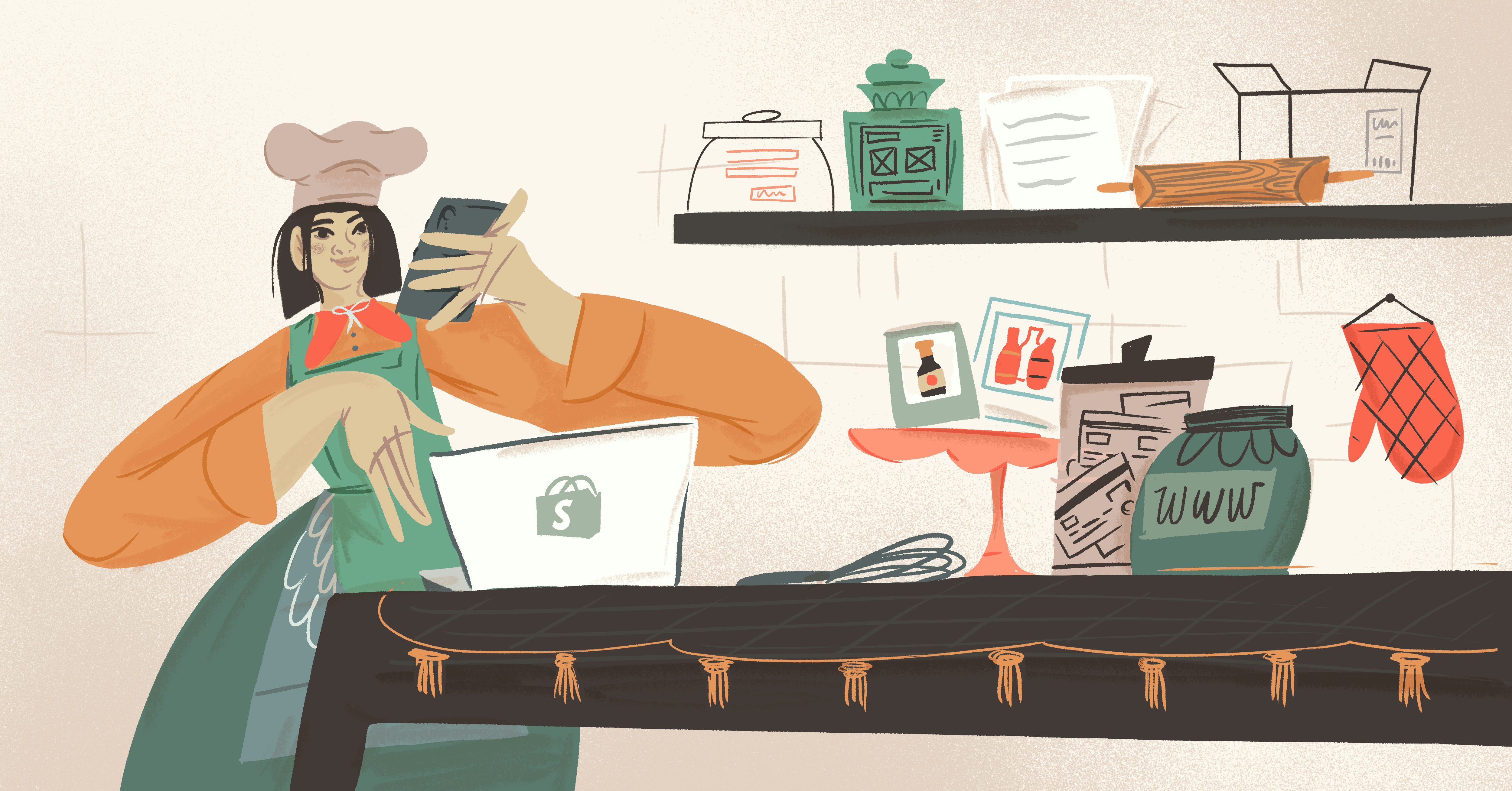
Illustration by Rose Wong
Read more
- Customer Service 101- A Guide to Providing Stand-Out Support Experiences
- How To Find Private Label Products and Start Selling
- 18 Best Ecommerce Email Marketing Campaigns for 2023
- The Rise of the Everyday Creator
- The Most Profitable Digital Products to Sell (and How to Promote Them)
- The Ultimate Guide To Dropshipping (2023)
- How to Start a Clothing Line in 12 Steps (2023)
- Free Business Plan Template- A Practical Framework for Creating Your Business Plan
- The Beginner's Guide to Selling on eBay- List, Manage, and Sell Your Products Through Shopify
- How to Sell on Amazon- A 7 Step Beginner's Guide
Crowdfunding FAQ
Is crowdfunding a donation or an investment?
What are the disadvantages of crowdfunding?
What is the best site to use for crowdfunding?