

 Shopify blog


Retail software is becoming a core investment area for merchants. According to Grand View Research, the global retail enterprise software market reached nearly $50 billion in 2025 and is projected to climb to nearly $90 billion by 2030, making it one of the fastest-growing technology sectors.
Today’s retail software ranges from basic POS terminals at the checkout counter to comprehensive retail management systems that unify point of sale, inventory management, retail analytics software, and integrations with accounting systems.
The best retail software offers all-in-one solutions, giving merchants a single source of truth for product, order, and customer information across brick-and-mortar stores, online channels, and back-office operations—whether you sell direct to consumer, wholesale, B2B, online, or in physical stores.
This guide explains what retail software does, the types retailers use most, and the key features that streamline operations and maximize cost savings while improving customer experiences.
What is retail software?
Retail software is a digital system that manages daily business operations including inventory, sales transactions, customer data, and payment processing—all from a centralized platform.
Before computers and the internet, essential software for retail stores didn’t exist. Retailers handled core tasks manually: entering sales numbers into ledgers, writing out and mailing order slips, and using punch clocks to manage employee schedules. These disconnected workflows made it difficult to measure sales accurately, manage inventory costs, or respond quickly to customer needs.
Retail software uses connected technology systems that replace those manual processes. By centralizing this information, retail platforms reduce errors, save time, and give retailers clearer visibility into cash flow and daily performance.
Most retail software supports three core functions:
- Transaction processing. Recording sales, processing payments, and managing checkout at the checkout counter.
- Inventory tracking. Monitoring stock levels and management features like reorders, and controlling costs.
- Customer management. Storing past purchases, contact details, and insights into customer behavior
Advanced retail software systems add analytics, omnichannel coordination, and automated marketing.
Today, retail software solutions range from point of sale (POS) systems to comprehensive retail management programs that integrate with other business applications like accounting systems or enterprise resource planning (ERP) software.
The best retail systems can do it all, creating a single source of truth for all the data related to your business—whether direct-to-consumer (DTC), wholesale, business-to-business (B2B), online, or in-person. Shopify POS, for example, integrates product, order, and customer information into a unified system, streamlining online and offline operations to help you run a smoother, more efficient business.
Unlike systems that rely on application programming interfaces (APIs) and middleware to connect separate platforms—creating data lag and miscommunication risks—Shopify’s natively unified platform shares a common data model across all channels, ensuring seamless coordination without integration headaches.
Cloud-based vs. on-premise retail software
There are two different kinds of retail software: cloud-based systems that run on vendor servers and connect via the internet, and on-premise solutions installed directly on local computers and servers.
Cloud-based retail platforms run on vendor-managed servers and are accessed through a web browser or mobile app. You use an internet connection to manage inventory and sales and review reports across both physical and online stores. Shopify POS, Square, Lightspeed Retail, and most modern retail platforms use cloud-based architecture.
Cloud-based systems offer several advantages for retailers:
- Lower upfront costs, no server hardware to purchase, and predictable subscription pricing
- Automatic updates and security maintenance from the provider
- Access from any device with internet connection
- Easier scaling across new locations or sales channels as the business grows
- Faster deployment compared to local installations
On-premise retail platforms install directly on computers and servers at your physical locations. Retailers own and maintain all hardware and infrastructure, manage updates, and handle data backups themselves. Some legacy POS software and custom-built systems still rely on this model.
Benefits of on-premise platforms for retailers include:
- Complete control over data—information never leaves your servers
- No recurring monthly subscription fees after the initial purchase
- Works without internet connectivity
- Customization for unique business requirements
On-premise platforms give you more direct control over data and offline functionality, but they can make it hard to scale or adapt as your business grows. As more retailers focus on omnichannel selling and real-time visibility into sales, cloud-based systems have become the more practical choice for supporting modern retail operations.
Custom vs. off-the-shelf retail software
Most retailers choose off-the-shelf retail software—pre-built platforms like Shopify, Square, or Lightspeed that work immediately after signup. These solutions offer proven functionality, regular updates, and lower costs than custom development.
Off-the-shelf retail platforms typically support core needs like tracking sales and inventory, processing payments, and automating marketing efforts, without requiring technical resources from you. For many small to medium-sized business (SMB) retailers, an off-the-shelf approach delivers faster setup and more predictable cost savings.
Custom retail software development may make more sense in certain scenarios, such as:
- Highly unique business models that standard platforms can’t support
- Enterprise retailers operating hundreds of locations
- Businesses with proprietary workflows that create a competitive advantage
- Organizations requiring deep integration with legacy ERP software
As retail platforms have become more modular and API-driven, the gap between custom and off-the-shelf solutions has narrowed. Modern off-the-shelf retail platforms allow you to extend functionality through apps and integrations, offering flexibility without the cost and complexity of building and maintaining fully custom systems.
Benefits of using retail software
Retail technology can streamline many different types of processes retail businesses require, especially as operations grow more complex. Instead of relying on multiple systems to manage sales, inventory, and customer data and relationships, a retail system brings these functions together in a more coordinated way.
And the demand is growing. According to Verified Market Research, the retail software market was valued at $2.73 billion in 2024 and is projected to grow to $6.8 billion by 2031, reflecting how critical these systems have become for maintaining a competitive edge.
Here are just a few of the ways it can give your business a leg up:
Higher efficiency and growth
Software helps retailers operate more efficiently while controlling costs as they scale. By unifying retail operations in one platform, you reduce time spent reconciling data across systems and lower your total cost of ownership (TCO).
In a period of rapid growth, the ability to set up and control a storeʼs POS system with a single click was a game-changer. It allowed us to open 60 new locations in a year.
Beyond faster deployment, unified systems eliminate the friction of managing multiple disconnected platforms. When inventory, sales, and customer data live in separate systems connected through APIs, retailers often face data delays, duplicate work, and higher operational overhead. A single platform helps reduce those inefficiencies, creating measurable savings while freeing your staff to focus on customers instead of software maintenance.
Better customer service
Retail software gives a complete view of every customer, from past purchases to support history, in one place. Associates can instantly see what a customer bought online or in-store, check real-time inventory, and respond seamlessly across email, chat, or in person.
Modern software also helps improve customer satisfaction by enabling more personalized service at scale. When staff can see customer behavior across channels, they can recommend relevant products, answer questions faster, and respond more effectively to customer feedback. This visibility transforms transactional exchanges into relationship-building moments.
According to Adam Davis, Magnolia Bakery’s senior marketing manager, bringing Shopify on as the business’s retail software platform allowed it to test ways to give a more tailored experience to its online customers.
“We wanted to test recommending certain products to certain purchasers who had certain things in their cart,” Adam says. “We uncovered learnings where it was like, OK, a banana pudding purchaser is more likely to add a cupcake to their cart. So why don’t we show that customer a cupcake on the sidebar once they have banana pudding already in their cart?”
By automating routine communications like order confirmations and shipping updates, retail software also gives staff more time to focus on meaningful customer interactions that build long-term loyalty.
Access to real-time data
Software gives retailers access to real-time data on sales, inventory, and orders across every channel. This visibility makes it easier to track both online and in-store sales, monitor inventory costs, and understand how cash flow changes day to day. By automatically updating inventory levels and recording transactions as they happen, retail software also reduces the risk of overstocking and stockouts. These insights support better purchasing decisions and more accurate forecasting.

More advanced systems now include retail analytics software that goes beyond basic reporting, like AI capabilities that transform raw data into strategic decision-making. Features like demand forecasting, trend analysis, and performance dashboards help retailers identify market trends and adjust pricing, promotions, and inventory levels with greater confidence.
Retail POS systems
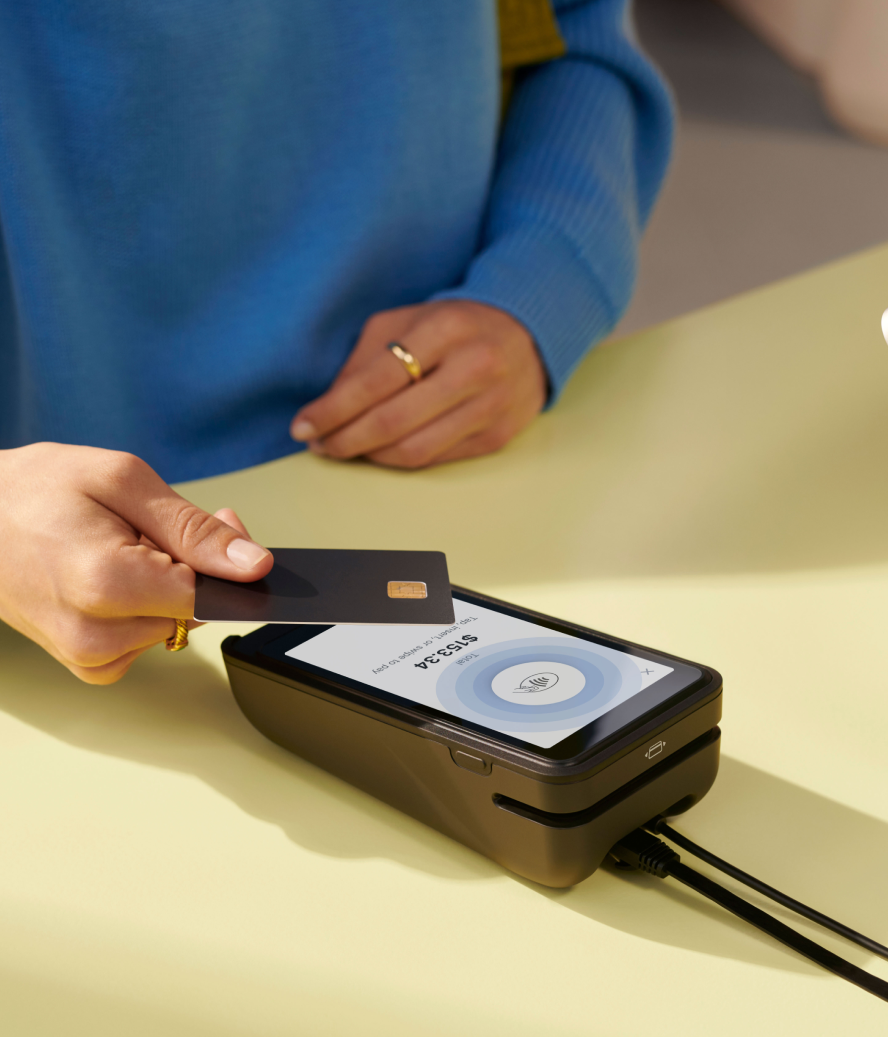
Point-of-sale (POS) systems form the operational foundation of most retail businesses. At a basic level, POS software calculates sales totals, accepts payments, generates receipts, and records transaction data.
Advanced platforms like Shopify POS expand far beyond checkout, integrating inventory management features, customer profiles, sales reporting, and support for omnichannel workflows—all from a single interface. This allows retailers to manage in-store operations while staying connected to online sales and fulfillment.
POS technology has also become more flexible in the past decade. Traditional terminals tied to fixed locations have given way to mobile POS solutions that run on tablets, smartphones, and other handheld devices. This allows associates to assist customers, complete sales on the floor, and support pop-ups or temporary locations, transforming how retailers serve customers—all while maintaining data accuracy from checkout to the sales floor.
The best POS software can integrate data from all your systems. While many require third-party integrations, Shopify can do it all right out of the box. Rather than relying on a series of disjointed platforms and integrations, Shopify unifies your ecommerce and retail data into a single command center, empowering retailers to run an efficient and successful business.
Other types of retail software
Point-of-sale systems form retail software’s foundation, but complete operations require additional specialized tools. Here are seven more software categories retailers depend on:
1. Payment processing software
Payment processing software manages how retailers accept and process payments from customers. It typically integrates directly with POS software or an ecommerce platform.
For example, Shopify POS includes built-in payment processing through Shopify Payments. When payment software is tightly connected to sales software, transactions move faster, reconciliation is simpler, and retailers reduce the risk of errors that affect cash flow management.

When evaluating payment processing software, look for solutions that support in-person and online sales, including contactless payments, tap-to-pay cards, and digital wallets. Flexibility here helps you adapt to changing customer preferences over time.
2. Customer relationship management (CRM) software
Customer relationship management (CRM) software helps retailers manage interactions with customers across channels. It allows you to create a more complete picture of each customer by tracking their purchase history, preferences, and engagement over time.
Retailers use CRM platforms to support targeted marketing efforts, personalized promotions, and automated follow-up communication. By organizing customer data in one place, CRM systems reduce reliance on manual tracking and help minimize human error in customer outreach.
More advanced CRM tools also enable segmentation—grouping customers by factors like purchase frequency, average order value, product preferences, or geographic location. These insights allow you to create targeted campaigns that speak to specific customer needs rather than generic mass messaging, increasing customer satisfaction, engagement, and conversion rates.
3. Inventory management software
Inventory management software helps retail businesses track what they’ve sold, what’s in stock, and what needs to be reordered. It can also automate processes like inventory updates and reordering when you hit low-stock thresholds, reducing manual entry and stockouts.
Advanced inventory systems can provide real-time visibility across multiple locations—warehouses, retail locations, and fulfillment centers. This enables strategies like ship-from-store and buy online, pickup in-store (BOPIS), helping retailers fulfill orders faster and use inventory more efficiently.
4. Marketing automation software
Marketing automation software like Shopify Flow automates marketing tasks and workflows, helping merchants engage with customers and prospects. It enables retailers to automate their email marketing, social media management, lead generation, and more.
Modern marketing software can also use data to personalize marketing experiences for existing customers or develop targeted campaigns for new markets. Automated marketing software can provide feedback and analytics, including campaign metrics and key performance indicators (KPIs) such as return on investment (ROI) and the campaign’s effect on sales performance, so retailers can better align promotions with real-time sales activity.
5. Ecommerce platforms
In a world where digital sales are crucial for most companies, ecommerce software like Shopify has made it easier for businesses to get in on their slice of the internet pie. Ecommerce software allows you to create a digital storefront with the features you need to sell your goods online, including website design, shopping cart functionality, and payment processing.
Traditional ecommerce software is a standalone application. More advanced versions use modular architecture and APIs to integrate with third-party systems, providing more flexibility and customization options.
6. Loyalty program software
Loyalty program software is designed to reward and retain customers by offering incentives for purchases and engagement with your brand. Shopify integrates with some of the top loyalty programs available, including Marsello and LoyaltyLion.
Loyalty program rewards can be points, discounts, and exclusive offers, depending on the program’s parameters. Retailers can track customers’ loyalty participation across online and brick-and-mortar channels.
Integrated loyalty tracking transforms occasional shoppers into brand advocates. When POS systems connect directly to loyalty platforms, staff can instantly see customer point balances, available rewards, and purchase history at checkout, which allows them to make personalized recommendations—suggesting products based on past purchases or reminding customers about rewards they’ve earned. Not only does this increase sales; it also strengthens relationships.
7. Vendor management software
Vendor management software helps retailers organize supplier information, track product sources, and evaluate vendor performance. For businesses sourcing products from multiple suppliers, these tools reduce manual tracking and keep supply chains organized.
With Shopify POS, you can assign vendors to products directly in the Shopify admin. This allows you to sort and filter inventory by vendor, generate reports, and gain valuable insights into your supply chain.
5 key features to look for in retail software
Retail software offers many tools to help manage and streamline your operations. But success in 2026 requires more than feature checklists.
When evaluating retail management software, look for these key features:
1. Sales tracking and reporting
Real-time sales data is essential for accurate inventory management, effective accounting, and informed business strategy decisions based on current trends and customer demand. Reliable sales tracking through a POS system ensures inventory levels stay aligned with demand, helps identify trends, and provides insights to fine-tune your business strategies.
Look for reporting tools that go beyond raw totals. The best retail and POS software visualizes trends through graphs and dashboards, compares current performance to previous periods, and breaks sales down by product, category, employee, location, and time period, making it easier to spot trends and adjust operations as needed.
2. Inventory management and tracking
Over- or understocking inventory can lead to unnecessary costs and disrupted operations. Inventory management software helps avoid these issues by updating stock levels automatically as sales occur.
More advanced inventory management software supports features like stock level alerts and product performance insights. When inventory lives inside the same retail management software as sales data, you can spend less time reconciling numbers and more time planning purchases with confidence.
Shopify updates inventory across all your sales channels in real time, preventing costly overstock or stockouts. Unlike systems that rely on APIs to sync inventory data, Shopify’s natively unified platform ensures seamless communication between channels, avoiding the risks of miscommunication and data lag common in disjointed setups.
3. Customer management and engagement
Customers are your company’s lifeblood. Customer management tools can improve engagement and retention through automated marketing, data gathering, and analytics. These tools can also help streamline other aspects of your operation, which frees up staff time for customer engagement and support.
Look for key features like automated marketing campaigns, personalized offers, and data-driven insights into buying behavior. Shopify integrates customer data from both online and offline sales, giving you a holistic understanding of customer preferences and behaviors.
4. Marketing and promotional tools
Personalized email campaigns, targeted promotional materials, and tailored customer loyalty programs are just a few ways retail software can strengthen your company’s marketing game.
Shopify has native marketing automation tools that allow you to create, execute, and analyze campaigns without the inefficiencies of relying on third-party platforms. By operating on a single system, Shopify allows you to create campaigns informed by unified data, leading to higher ROI and better customer experiences.
5. Integration with other business systems
Look for software that easily integrates with your other systems—for example, POS platforms that connect with inventory management systems and ecommerce tools that integrate with payment processors and accounting software. The more the different parts of your business talk to each other, the better off you’ll be.
Ask potential software vendors specific integration questions:
- How do systems sync—in real-time or through batch updates?
- What happens when internet connection drops?
- Who troubleshoots when data doesn’t transfer correctly between platforms?
The answers reveal whether you’re buying a solution or inheriting new problems. Native integration—where all features come from one provider sharing a common database—eliminates these concerns entirely, which explains why unified commerce platforms are replacing patchwork solutions across retail.
Many retailers face challenges when they patch together disparate systems using APIs or middleware. While these solutions might appear to work on the surface, they often lead to data miscommunication, operational complexity, and higher long-term costs.
Shopify eliminates this risk with a natively unified platform, where ecommerce and POS solutions share a common data model. This allows seamless coordination between inventory management, payment processing, customer engagement, and sales reporting.
Top retail management software: Shopify POS
Shopify POS is a retail management system that is natively integrated with your Shopify ecommerce site. It provides a single source of truth for product, order, and customer data, helping merchants manage their entire business—inventory, orders, sales, customers, and more—from one platform. And with mobile POS hardware, retailers can sell anywhere their customers are.
Businesses can test and expand to new channels with fully integrated solutions for ecommerce, wholesale, and international markets. Built-in omnichannel capabilities enable strategies like endless aisle (selling inventory from any location at any register), BOPIS, and unified customer profiles that work across all touchpoints.
Retail software FAQ
What is a retail management system?
A retail management system is comprehensive software that streamlines multiple parts of retail operations—inventory, orders, sales, customers, reporting, etc.—from a centralized platform.
Unlike standalone tools that handle single functions, retail management platforms unify data across all business areas, eliminating duplicate entry and providing complete operational visibility. These systems typically include point-of-sale (POS) functionality, inventory tracking, CRM, employee scheduling, and analytics dashboards. Modern systems also often operate in the cloud, making them accessible from anywhere that has an internet connection.
Can retail software integrate with other systems?
Yes. Many retail applications can integrate with other parts of your business, including accounting software, employee management software, POS software, and/or marketing platforms. Integrating these parts of your business can streamline operations, saving you time and money.
The most seamless approach is to use natively unified platforms where all features share a common database, eliminating the need to piece together integrations while ensuring data stays consistently up to date in real time across all business functions.
What is retail software used for?
Software helps manage many daily store operations, such as:
- Processing sales transactions
- Tracking inventory levels
- Storing customer purchase data
- Generating financial reports
- Coordinating between online and physical locations
The software can also sometimes automate manual tasks like calculating sales tax, updating stock counts after purchases, and sending order confirmation emails. Advanced software may come with built-in analytics showing bestselling products, customer buying patterns, and sales trends that help inform business decisions. Most retailers use software to reduce errors, save time on administrative work, and create better shopping experiences.
Is retail software typically suitable for businesses of all sizes or better suited for larger enterprises?
Retail software is suitable for businesses of all sizes, not just larger enterprises. It can save time and improve accuracy, allowing you to focus on other areas of your operation. For example, a retail POS system can help expedite transactions and boost sales, giving you more time and resources to spend on product design. But whether software is suitable ultimately depends on your specific needs and requirements.
What is retail CRM software?
Customer relationship management (CRM) software is an application that collects customer information, such as purchase data, preferences, and contact information. A CRM can be used for building targeted marketing campaigns, to improve customer experience, or for new lead generation.

