

The direct-to-consumer model has exploded in popularity in recent years.
Large businesses that once sold predominantly through retail partners are pioneering their direct-to-consumer (DTC) efforts. For example, Nike’s DTC business accounted for just 15% of its revenue in 2010. Fast forward to 2022 and that figure jumped to 40%.
The emergence of DTC has changed the way customers shop. Now, almost six in 10 shoppers buy directly from a brand at least once per week.
In-store foot traffic at physical stores may still be below pre-pandemic levels, but traditional retail remains an important channel for commerce businesses. Buyers like to interact with a product before committing to its purchase, and omnichannel customers who hop between on- and offline spend 20% more than single-channel shoppers.
The trend for 2023 is clear: customers are clearly buying everything, everywhere. The real question is: Which is the path of least resistance for brands to reach and acquire more customers?
This guide explores two different business models—DTC vs. wholesale—to help you decide which is right for your brand—as well as best practices for using both.
What is wholesale?
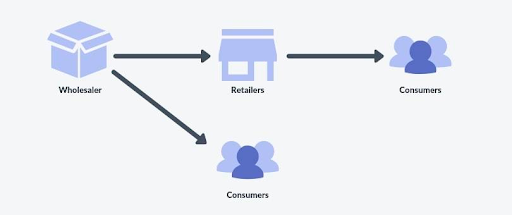
Wholesale is a business model where businesses sell products to other companies in bulk at a lower cost.
Costco is an example of a wholesale brand. Its customers are businesses that typically resell its inventory in their own stores. Buyers purchase products in bulk at a cheaper price than the end customer will pay. They make money on this markup.
Wholesale is big business. Studies show that this type of business-to-business (B2B) ecommerce generated $687.8 billion in December 2022—a 7.3% increase from the previous year.
Pros of being a wholesale business
Various factors contribute to the growth of wholesale commerce. Key advantages of selling wholesale include:
-
Wider reach. Wholesale customers typically have built-in audiences. If you’re selling wholesale to a department store like Walmart, for example, you’ll reach the
230 million weekly shoppers already familiar with the brand. That would require a multimillion-dollar advertising budget to achieve through DTC.
Higher average order value. The biggest difference between wholesale and DTC is B2B buyers purchase products in bulk at a discounted price. This higher-than-usual average order value can improve cash flow.
Reduced operating costs. Wholesalers often have their own distribution networks to distribute products on your behalf. Plus, when selling B2B, you only pay fulfillment costs—like shipping, fulfillment, and packaging materials—for a single large order, rather than individual items to the end customer.
One point of contact. Susana Saeliu, co-founder and CEO of Pluto, says: “Even though it can take some more time to build a brand by going purely wholesale from the beginning, it can also be less of a hassle in terms of dealing one-on-one with individual customers.”
Natural retention. Wholesale customers want consistency. If your products have a high sell-through rate in their own stores, B2B buyers will return to purchase again. This predictable revenue makes it easier to scale.
Jay Allen, CEO of Smith & Bradley, adds: “The wholesale channel requires work to sell into businesses and find new accounts. It’s a different shipping and financing model than DTC. But the revenues and profits are helping us to fund and grow the DTC side of the business.
“Ultimately we are a DTC manufacturer, but adding the wholesale business gives us more exposure in the marketplace, more revenues, and more leverage with suppliers. We’re scaling because of this extra effort.”
Cons of being a wholesale business
The downsides of the wholesale business model include:
Lower profits. Wholesalers buy products in bulk, but at a lower price. This means your profit margin is lower on each product compared to selling DTC.
Less control. While you can provide guidance, wholesale customers have ultimate control over how they sell your products. Take discounting, for example. If retailers go below your recommended retail price (RRP), they can draw customers away from purchasing directly from your brand, where profit margins are highest.
-
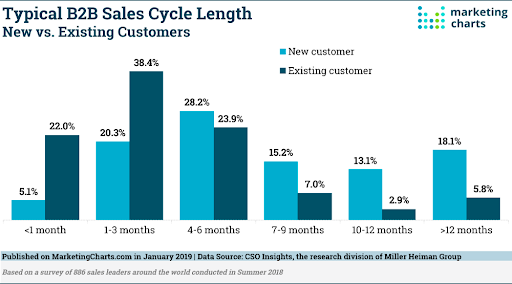
Relationship building is critical. The average B2B sales funnel involves up to 10
decision makers who take up to a year to make their decision. You’ll likely need a team on hand to guide buyers through this process and continue the relationship post-purchase.
What is direct to consumer?
A direct-to-consumer business sells products directly to the end customer, usually through owned sales channels like an ecommerce website or brick-and-mortar store. It’s a business model set to surpass $212 billion in sales by 2024.
Gymshark is an example of a DTC company in the fitness industry. Customers can only buy its apparel through its website, international pop-up shops, and London store—each of which are controlled by the brand itself.
Pros of being a DTC business
DTC is a popular business model—and for good reason. The biggest advantages of selling directly to the end customer include:
Greater control. The absence of wholesale or retail stores means direct-to-consumer brands are only at the mercy of their customers. They can pivot, test new products, and have the final say over marketing materials—decisions that wholesalers are typically involved in when selling B2B.
Cost savings. Unlike wholesaling, selling DTC means you sell products at their recommended retail price. There’s no need to take a hit on profit margins unless you offer discounts (which, again, is within your control).
Greater personalization. Because end consumers rarely purchase products in bulk, you can afford to personalize products on a smaller scale. This is a huge money-making opportunity; customers are up to 69% more likely to buy from retailers that offer customized products.
-
Access to customer feedback.
Susana says: “There’s no better way to get customers’ thoughts quickly than through our owned customer experience channels. In the same vein, we wanted to set a good customer service foundation and set the tone for the brand from the get-go; the aim was to shape that first before we go through other channels like wholesale.”
Faster time to market. Got a new product idea? Since you have direct contact with your end customers, you can quickly validate new ideas before investing more resources into product development.
Jamie Gemmell, digital manager at LVI Thermosoft, says: “Direct interaction with customers allows us to better understand their needs, preferences, and feedback. This helps us develop new products and improve existing ones, leading to higher customer satisfaction and loyalty.”
Cons of being a DTC business
While selling DTC does have its advantages, it’s not a guaranteed business model for success. Disadvantages to selling DTC include:
You’re in control. Ultimate control over your business can be a blessing and a curse. While it means you can pivot easily and experiment with new strategies, a lack of insight from retailers—many of whom may be further along in the process than you—can cause problems.
Higher marketing costs. There are more than 110,000 DTC brands in the United States, so to stand out selling DTC you need a strong value proposition and differentiator. You can’t leverage the existing brand reputation of a retail partner when selling DTC.
-
Increased risk. The more diversified your business, the less chance there is of something going wrong and disrupting revenue. If you’re a DTC company that only sells via an ecommerce website, for example, what happens if the site crashes? If you were to
sell wholesale, customers could still get their products through retail partners.
Ben Kuhl, CEO of Shelf Expression, adds: “It can be expensive to sell directly to consumers, since you’re responsible for more of the process. And depending on what you’re selling, you might not be able to reach as many people as you could if you used wholesalers.”
Should my business be wholesale or DTC?
Wholesale and DTC are very different business models, with pros and cons to each. How do you decide which model to choose? Here are three things to consider when deciding between the two—or evaluating whether to do both.
Demand for personalization
It’s difficult to personalize products in bulk, which presents difficulties when selling wholesale. Business customers purchase off-the-shelf inventory in bulk. They rarely offer customization to their own customers.
If you’re selling products with a high level of customization, or personalization is your unique selling proposition (USP), DTC may be the best option.
Michael Heckert, owner of OurCoordinates, says: “We specialize in made-to-order, engraved jewelry. Due to our items being highly personalized and unique, the DTC business model was, in our eyes, the best route to take the business.”
Industry
Some industries are bound by regulations, which can be an issue if you’re selling directly to the customer.
For example, Mike Black, co-founder of CBD wellness business Mellow Oak, says his company “set out to run an ecommerce-only model, but quickly realized the limitations CBD products have when it comes to marketing online.”
Mike adds: “Platforms like Google and Facebook restrict advertising for CBD, which makes it difficult to promote our products. As a result, we started working markets and developing relationships with wholesale clients. We have seen great results so far with our wholesale efforts, helping us build a presence in the community and generate higher average order values.”
“We have found that our combined business model has been a great fit for our business. We are able to reach customers through both channels and have been able to build valuable relationships with wholesale clients while maintaining the ability to sell directly to customers through our ecommerce store.”
Customer education
Wholesale customers often opt for products that “sell themselves” with minimal heavy lifting on their behalf. But if you’re selling DTC and can invest heavily into customer education, it can be a winning formula for innovative or highly demonstrable products.
“We initially started doing wholesale with our luxury pergola product through a dealer network,” says Stacy Elmore, co-founder of The Luxury Pergola. “We moved to DTC and found our market for customers increased dramatically. The DTC provides access to more consumers and offers better cash flow for our business.”
The brand now sells almost exclusively DTC. Stacy continues: “The biggest difference that caused us to shift is that our product is relatively innovative for the outdoor space. It makes more sense for us to show the benefits directly to customers, rather than trying to convince dealers or contractors of the benefits and rely on their marketing efforts.”
Best practices for being both wholesale and DTC—without conflict
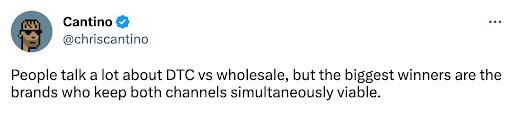
Selling both wholesale and DTC often gives retailers the best of both worlds. They can experiment and validate new ideas via DTC, and benefit from bulk orders with upfront payment by selling wholesale. That said, there’s risk associated with selling across both channels.
Here’s how to strike the balance of being both wholesale and DTC, particularly in the current economic environment.
Clearly define your direct-to-consumer strategy
Selling direct-to-consumer for the first time is like building a new bridge while simultaneously trying not to burn older ones. In your attempt to own the customer relationship and the valuable data that comes with it, you’ll bypass trusted retail partners.
Sharing your DTC ambitions with valued retail partners doesn’t have to end in burned bridges. Two of the most important considerations when using the hybrid model include:
Providing clear value to the customer
Not introducing friction to the customer journey
Clearly define your DTC strategy to anticipate potential channel conflict or the potential cannibalization of retail sales. The goal is to resolve these conflicts before they impact the consumer.
If shoppers wonder whether they might be able to find your DTC offer cheaper at a big box retailer, for example, they may delay their purchase.
The potential for channel conflict increases when companies focus on DTC as a sales driver. But if used to inform new product creation or to fine-tune marketing strategy, your DTC strategy may increase retail partner sales and strengthen your relationship.
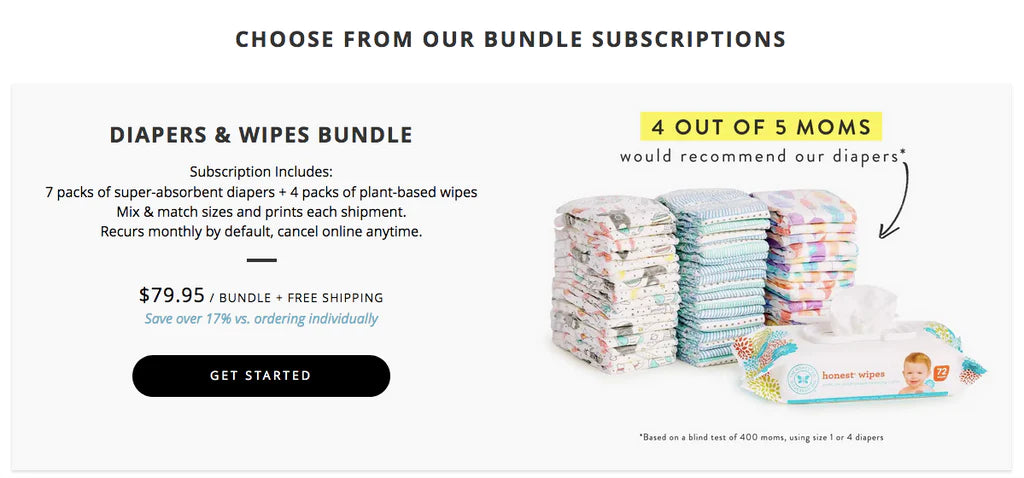
The Honest Company, a CPG company founded by actress Jessica Alba, drives new DTC sales while also increasing revenue for retail partners. Consumers purchasing directly from the brand’s website can bundle items they use most often and have them delivered as subscription-based products:
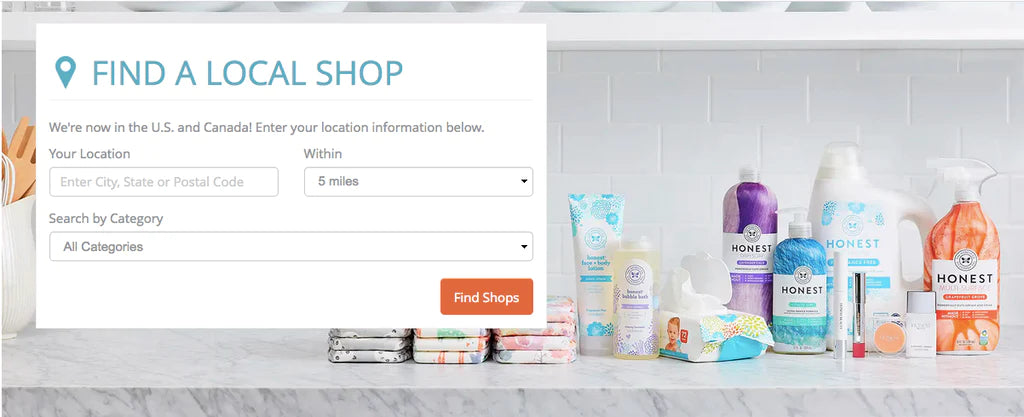
The company’s site doesn’t neglect its retail partners, making it easy for consumers to find a retail location nearby if they prefer shopping in-store.
Similarly, evaluate the role of discounting in your DTC versus wholesale strategy.
Jay says: “The biggest issue tends to be around DTC promotions when you have inventory in the wholesale channel. We agree with our wholesale partners on promotional dates: neither of us can break prices outside of set times during the year.
“This prevents us from undercutting our wholesale customers as well as the reverse, [and] puts pressure on the DTC channel to perform well without heavy discounts.”
Differentiate to avoid direct competition
Bypassing retail partners isn’t necessarily a zero sum game in which your DTC sales cannibalize retail partner sales. Consumers may purchase from both of you if given a compelling reason and offered the right incentives.
Deliver both by differentiating your DTC offering from what retail partners offer in their brick-and-mortar stores. Creatively bundle, brand, or package your DTC offering so as not to compete directly with retail partners.
Marialexandra Garcia, founder and CEO of Outplay, says, “In order to maintain a good relationship with our DTC customers, we plan to limit the SKUs sold via wholesale. Down the road, we will do the same for wholesale, where we will be able to offer SKUs to our wholesale accounts that we don’t offer through our DTC model. This helps with the ‘newness’ our final customer wants to see and keeps them coming back.”
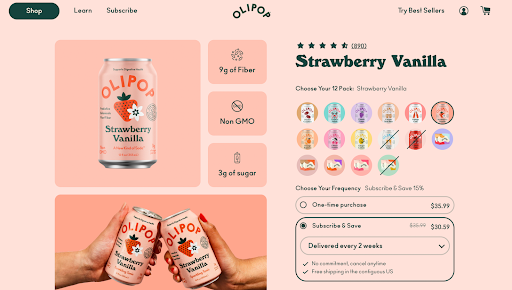
Take Olipop, a brand operating in a crowded industry: canned beverages. Its unique selling proposition is that it’s healthier than traditional soda. Each can is non-GMO, contains nine grams of fiber, and is low in sugar.
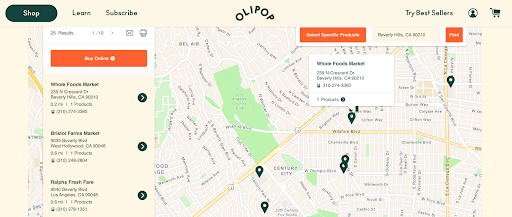
To distribute its soda, Olipop uses a hybrid model of DTC and wholesale. The differentiation between each channel is that customers can use the store locator to select the flavor they want to try—some of which are exclusive to each partner.
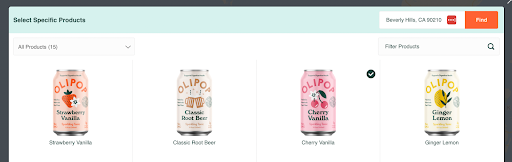
Online shoppers are presented with a list of wholesale customers selling the item—a truly omnichannel retail experience, whereby the brand supports its retail partners using exclusive products.
Alongside exclusive flavors, Olipop differentiates both channels with its DTC-only subscription service. Customers who buy direct from its ecommerce store can save 15% if they commit to bimonthly purchases.
Studies suggest that three-quarters of DTC brands will offer subscriptions in 2023—and for good reason. Not only do discount incentives cater to customers worried about inflation and the recession, but they drive predictable revenue for the brand.
Partner on fulfillment
Under pressure to compete with Amazon, ship online orders faster, and overcome ongoing supply chain disruption, retailers are increasingly turning their stores into mini-warehouses and fulfillment centers.
If you’re simply experimenting with DTC or have no intention of fulfilling orders on your own, partnering with retailers to fulfill orders is a win-win scenario.
Rob Weatherhead, founder of Affordable Wines, says, “Our industry has gone through a lot of supply issues, so we had to be sure we were through them and had a supply chain that could service larger orders.”
Similarly, consider offering a “pickup in store” option as part of your online DTC strategy. Whether you fulfill orders yourself or outsource them to retailers, this gives consumers additional options and can increase in-store foot traffic. Consider working with retail partners to build a dedicated online order pickup area or possibly a store within a store to deliver a branded experience.
You could even ask retail partners if they have dark stores, or facilities at the outskirts of large metro areas that are closed to the public and dedicated specifically to fulfilling DTC orders.
The decision to partner on logistics is one of several “buy or build” choices you’ll make when going DTC.
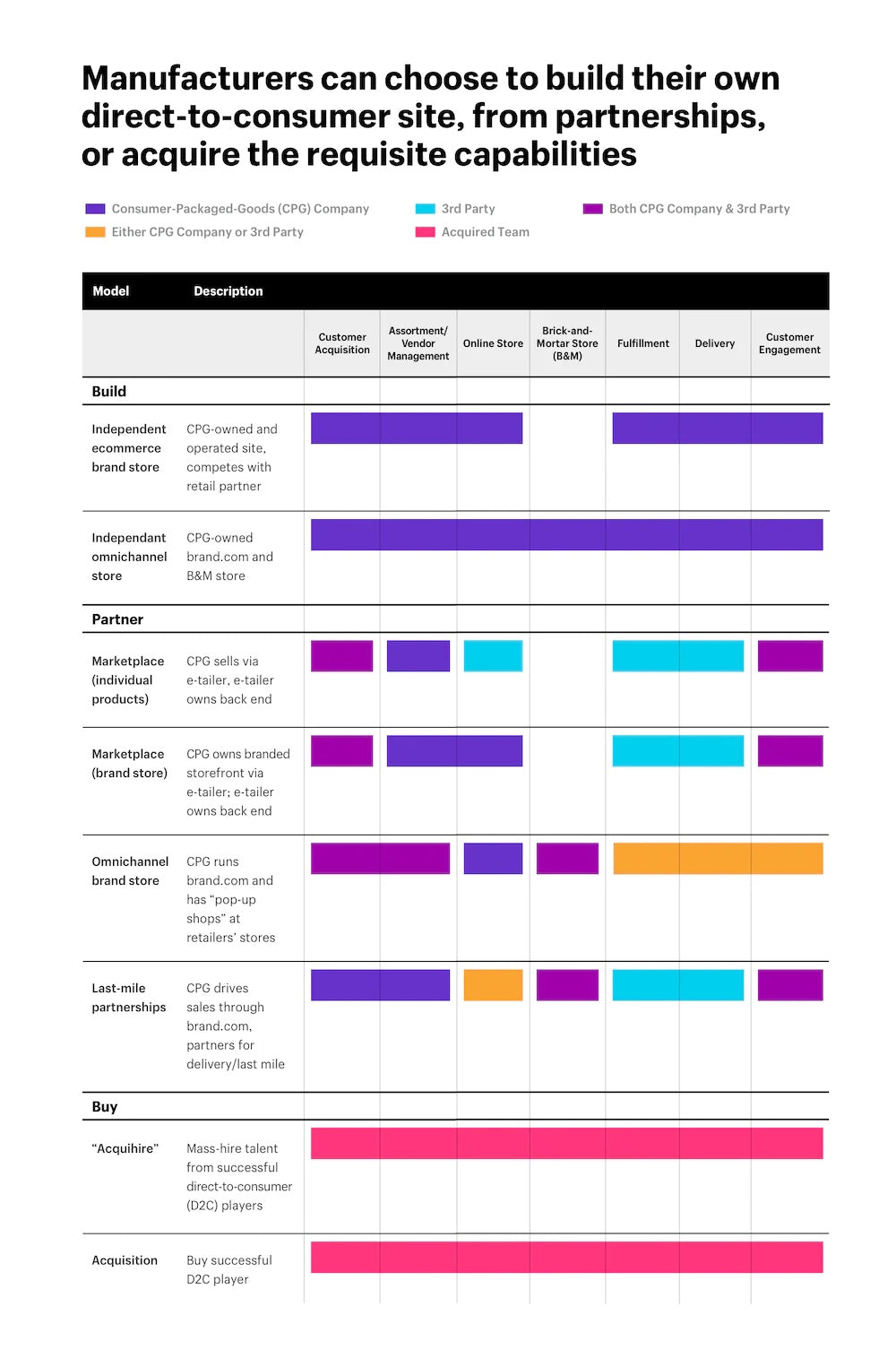
Image via: McKinsey & Company
Lastly, touting an omnichannel strategy can also endear you to retail partners. Investments you make across consumer touchpoints can result in incremental sales which partners may not have made without you.
Omnichannel buyer journeys are dynamic. What starts online can wind up leading consumers into brick and mortar stores they might not have visited without prompting from your DTC effort.
Increase partner sales using data
The customer data you’ll collect going DTC can be used to help channel partners improve their overall businesses. As a brand with a direct relationship with the customer across channels, you’ll have path-to-purchase insight retail partners can use not only to better market your product, but all of the products they sell DTC.
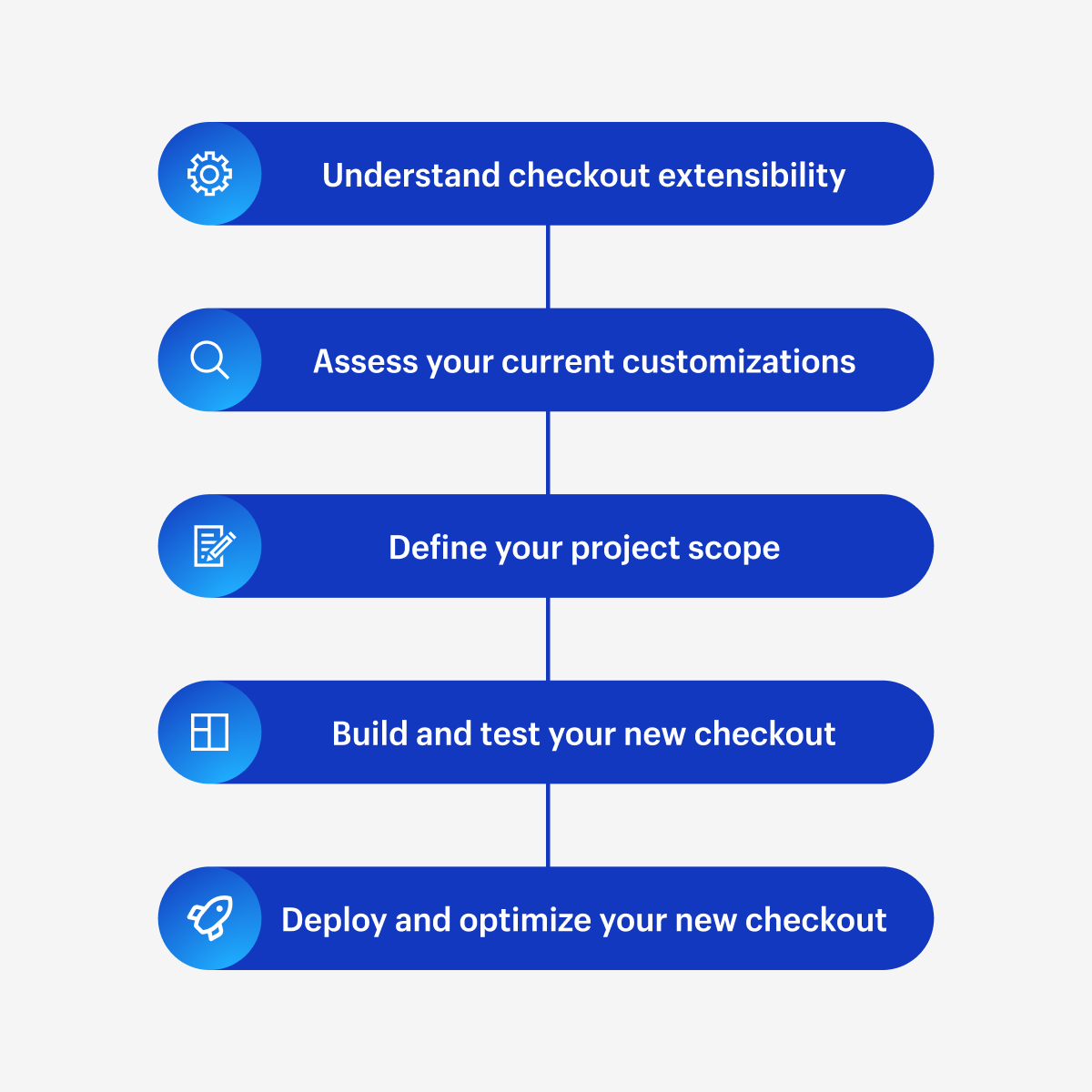
Image via RedPoint Global
Immerse yourself with your early DTC adopters to learn what motivates them and how to construct incentives that increase sales.
It’s how Fit for Life has strengthened its relationship with retail partners since going DTC. Each quarter, Fit for Life audits its brick-and-mortar retailers, hands out report cards, and offers training sessions aimed at helping partners optimize their ecommerce channels.
For example, it recommends retail partners:
Ensure each product has variant SKUs, rather than separate SKUs, so its sales history and product reviews are attached and move it up the page
Ensure each attribute is placed in the right category—all yoga mats are included in the yoga mat category rather than fitness mat category—to improve the customer search experience
“They are begging us for data,” says Katrina High, Fit for Life’s merchandising director. “We take what we’ve learned and offer it to our partners. This is obviously good for us, but it also helps them make incremental sales.”
Improve the B2B buying experience
DTC success hinges on continuously optimizing the customer experience. Don’t forget about doing the same for B2B buyers.
Automating the ordering process for B2B buyers not only makes you both more efficient, it can also attract new customers. You’ll cater to the 90% of B2B buyers who want DTC-style experiences from the vendors they buy from online, and capture the 25% of wholesalers that have switched vendors after just one negative online experience.
According to Gartner, just 17% of a B2B buyer’s time in the sales process is spent interacting with sales representatives. More than a quarter of their time is spent researching independently online. Cater to these wholesale customers with a self-serve ecommerce store.
Then, use Shopify’s ecommerce automation functionality to assess where a wholesaler is in the buying process and deliver targeted marketing campaigns that convince them to buy.
If a B2B customer completed your wholesale application form and said they’re looking for inventory with a high sell-through rate, for example, automatically email a whitepaper that shares your highest performing SKUs. A selection of testimonials and handy tips to resell the products could seal the deal.
Michael Martocci, founder of SwagUp, says, “We now have customers willing to place $50,000+ orders online on their own, with minimal to no hand-holding by reps. If you can get large B2B AOVs [average order values] with low sales overhead, you can build a pretty profitable business.”
Laird Superfood, a DTC brand that sells plant-based coffee creamers DTC and wholesale, improved the buying experience for its B2B customers. The company reports month-over-month sales increases of 15%. B2B accounted for about a quarter of overall sales prior to improving the buying experience and Laird expects that figure to top 75% within two years.
“Being able to automate the process changes how we build our team,” says Luan Pham, Laird’s marketing chief. “It prevents us from missing 2 a.m. orders and keeps our customers from having to wait to place an order until we’re in the office. It just solves so many problems.”
Find an ecommerce platform to handle B2B and DTC transactions
The shopping experience for DTC and wholesale customers is vastly different. But with Shopify Plus, you can sell to both customer groups from the same online store, so you don’t need to worry about multiple hosting plans, theme design, or development costs.
Colin Barceloux, CEO of Lively Root, says, “One of the biggest priorities for us was to make sure both parts of the business—D2C and B2B—felt unified. Same brand, same website, same quality, and, most importantly, same service.
“The biggest mistake I think companies make is trying to separate the two. The more a company can integrate both types of offerings, the better off they will be in the long term!”
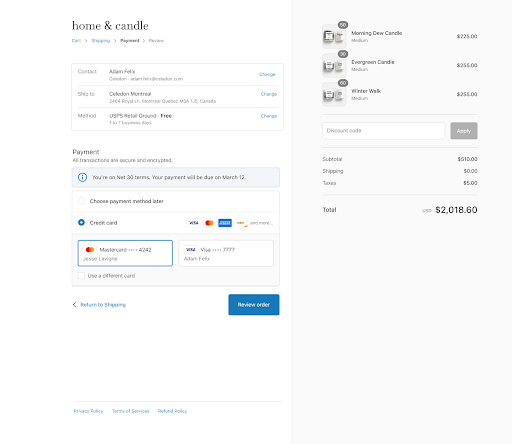
Use Shopify Plus’ robust B2B ecommerce platform to gate wholesale prices behind a password-protected portal on your main DTC website.
Wholesale customers can visit your DTC website and sign in to:
See wholesale and MSRP prices
View pre-agreed payment terms
Get reminders of when their invoice is due
Invite stakeholders to view previous orders
Customize shipping addresses (if they have multiple locations)
Brian Hawkins, CEO and founder of Ghost Bed, says, “Omnichannel is where the sales are to build a brand. Shopify is the platform to be able to do that without losing any sleep at night and to know everything is running smoothly.”
DTC vs. wholesale: it doesn’t have to be one or the other
The beauty of ecommerce is that you can sell online to anyone, anywhere—no matter the customer.
Selling wholesale and DTC provides the best of both worlds. Ease cash flow issues with B2B orders paid upfront in bulk, and collect customer data through owned DTC channels. Just be sure to differentiate each channel to avoid frustrating either buyer.
Need help expanding? Learn more about selling through wholesale and DTC with our omnichannel guide.
DTC vs. wholesale FAQ
What is the difference between direct to consumer and retail?
Direct to consumer (DTC) means selling your products to the end consumer. If you’re partnering with retailers, however, you sell products in bulk directly to the wholesaler, who then goes on to sell individual products to their own customers.
What is considered direct to consumer?
Direct to consumer is any type of business that happens when the consumer purchases products directly from the brand or manufacturer.
Is DTC cheaper?
It’s often cheaper to buy products directly from a brand, rather than its retail partners. This is because DTC brands have higher margins and can afford a small discount or incentive to acquire new customers.
Is DTC more profitable than wholesale?
If selling the same volume of inventory, DTC is more profitable than wholesale because you get the full price for each product sale. Wholesale customers, on the other hand, buy products in bulk at a lower cost per unit.
Read more
- Ecommerce Chatbots: 22 Ways to Increase Sales, Conversions & Retention
- Selling $3 Billion on Autopilot: Less Effort, More Growth via Ecommerce Automation
- Multi-Channel Customer Acquisition: 7 Tips from $3.7M+ in Ad Spend
- 10 Best Omni-Channel Retailers and What You Can Learn From Them
- How 3 Brands Scaled Their Ecommerce Subscription Model 100-350%
- Ecommerce Agency Automation: Saving Time, Selling More & Launching Faster
- 4 Strategies to Future-Proof Your Brand
- International Ecommerce Strategy: New Tools to Simplify Global Growth for High-Volume Businesses
- Ecommerce Site Search Best Practices: How to Sell More to the People Who Want to Buy Now
- 11 Ecommerce Checkout Best Practices: Improve the Checkout Experience and Increase Conversions

