How buying impacts the environment is a key concern for both retailers and consumers. The Harvard Business Review reported in an online survey that 65% of participants wanted brands that were “purpose-driven,” but only 26% actually followed-through. Since “greenwashing” has infiltrated the narrative of so many brands, it can be difficult to understand what is actually green, and what is deceptive green marketing.
This performative care some companies have toward the environment is increasingly less tolerated. Consumer activism is nothing new; the causes may change over time but buyers continue to speak with their wallets. And right now, they’re speaking out about combatting climate change.
Brands are not only faced with questions about how their products are made, like if sustainable and ecologically-minded materials are used, but also how products are packaged and shipped. In 2018, Fast Company reported that 165 billion packages are shipped in the U.S. each year. Ecommerce has drastically changed the path to purchase, which means that with online buying there is an uptick in packages collecting in the homes of millions of buyers.
According to Forbes, those packages tend to be sent individually, since retailers over-package to ensure goods arrive in perfect condition. Instead of packing a box full, there’s an excess of space, and plastic bags filled with air for extra padding. Yes, packages are dropped a lot. Almost 17 times a day, according to Marketplace. But that means retailers are shipping boxes of air to consumers to then put back into a broken system of garbage and recycling.
This is the reality many brands are faced with. They’ve seen the error and growth of retailers in the past, and try to commit to a future where packaging becomes less of a headache and more utilitarian and ecologically-friendly.
From sustainable products to shipment practices, it is important to see that, across industries, packaging is a vital part of a brand’s sustainability efforts. Here’s how retail brands across every industry are tackling sustainable packaging.
How the beauty industry tackles sustainable packaging
Beauty brands have a crucial role to play in combating climate change. By virtue of their design, hair and makeup products are only used for a short time before being tossed. An entire can of hairspray might easily be thrown into the recycling bin, but an unused eyeshadow palette might be thrown in the garbage without separating the waste from what can be recycled.
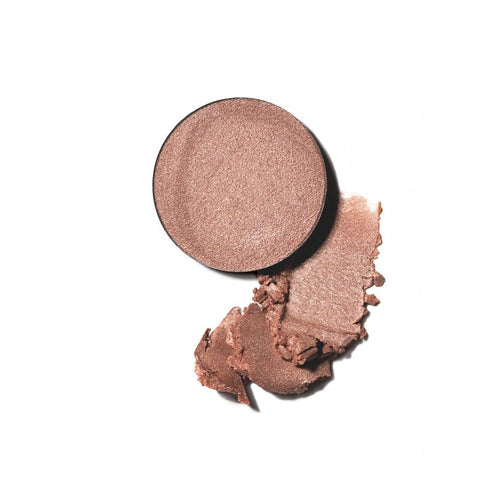
Retailers and product developers are now tasked with trying to find solutions for single-use products. Elle recently reported on a number of beauty brands who have contributed to the sustainability movement with refillable products and packaging. For example, Alima Pure has been testing soy-based refillable palettes and boxes that are made from 100% post-consumer recycled paper.
But they also take it one step beyond packaging: Their products (e.g. concealer, foundation, and eyeshadow) can all be refilled when the product runs out. Rather than buying a new one, refilling a product significantly cuts down on plastic and chemical waste. But the products available for refills are usually higher end and come at a higher cost. For Alima Pure, refills tend to cost less than buying the product again. It isn’t always manageable for every buyer, but it’s a starting point for brands to consider how they can help shift the mindset of consumers to pay more for sustainable brands.
The Body Shop, too, takes back containers and incentivizes buyers to do so with a reward system.
It seems like common sense, but reusing packaging is generally more sustainable than creating packaging from eco-friendly materials. That’s because manufacturing eco-friendly materials still uses up energy—so it's just as important to train consumers to consume less, without affecting a brand's profit margins.
Sustainable packaging in footwear
Increasingly, shoe brands are taking a look at ways to do their part to help the environment. Fashion is responsible for 4 percent of the total waste per year, which is around 92 million tons. Shoes contribute about one-fifth of the total impact from the apparel industry, largely because of rubber and oil used in the manufacturing process.
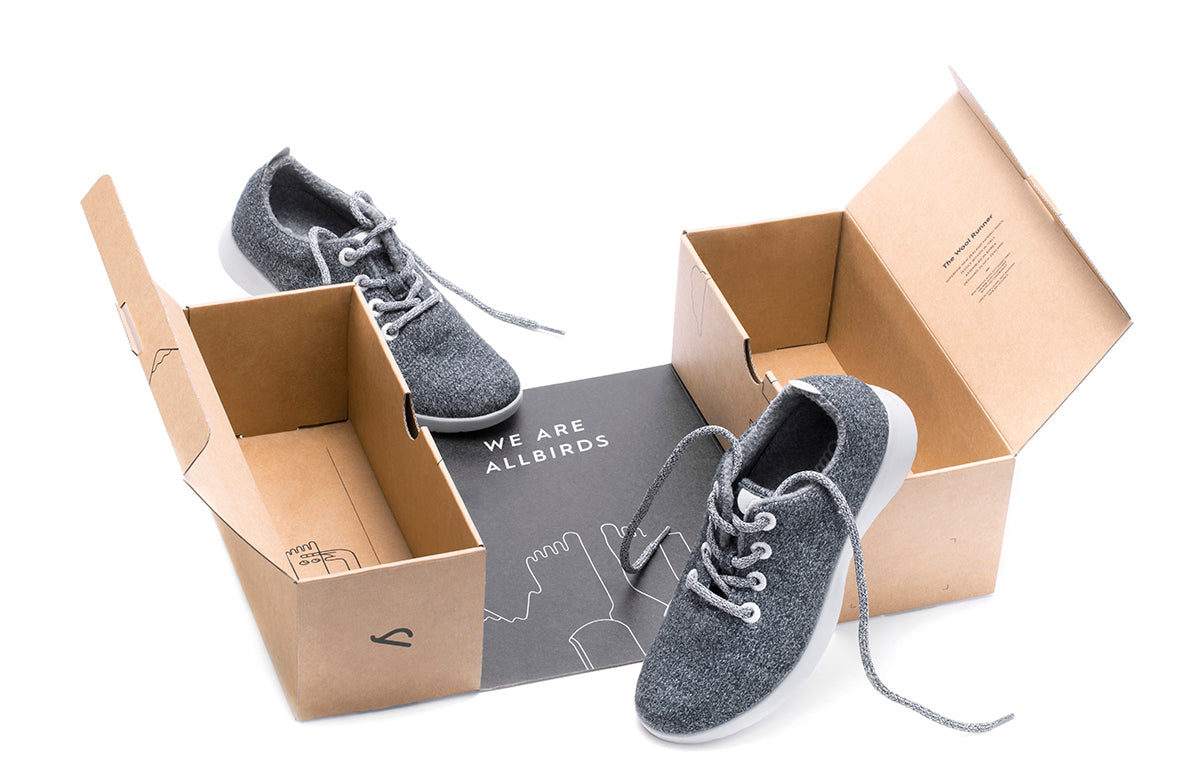
Shoeboxes are rife with materials that will end up either in the trash or recycling box: tissue, cardboard, and plastic inserts. Usually, shoes come in two boxes—one for shipping and one that actually contains the footwear. It’s a redundancy that can be solved with the single-box approach, where the box acts as both the shipping container and the shoe box.
Often, brands who are thinking about sustainable packaging already have sustainable products, which Allbirds does. Its shoes are made with natural materials and sole formed out of sugar cane instead of oil. Their single-box solution is made with 90 percent post-consumer cardboard and entirely recycled. In terms of cost, Allbirds does this with a self-imposed carbon tax to offset the emissions that come from producing its shoes.
Other brands have begun to adopt a single-box solution combined with a give-back mentality. Aldo, for example, sends buyers home with the box the shoe comes in as the “shopping bag.” But, taking a step further, Aldo participates in the Give Back Box program. Buyers can reuse the boxes their shoes come in and repack them with old apparel to be repurposed by organizations like Goodwill and Salvation Army. This works to reduce the amount of waste built up by tossing out products instead of redirecting them to donations.
An ugly looking sustainable solution in the food industry
Pristine presentation of products matters in every industry, but none more than in food. Since many consumers believe that a bad-looking piece of fruit must taste bad, “ugly” food often goes to waste.
Enter Misfits Market. Since 2018, they have sold organic produce that, for whatever reason, farmers cannot sell because the product is itself a “misfit.”

“By “misfit,” we mean something that might be a little misshapen, and maybe some spots of discoloration or simply excess inventory,” says Holly Eagleson, Misfits Market’s head of marketing. “The produce we source would have gone to waste and ended up in a landfill or composted when we have 23 million Americans living in food deserts across the country.”
Tackling the “ugly” food problem helps curb food waste, which helps lessen the amount of methane released into the air. “When food rots in a landfill, it emits methane gas, which is up to 30 times more potent than carbon dioxide,” says Eagleson.
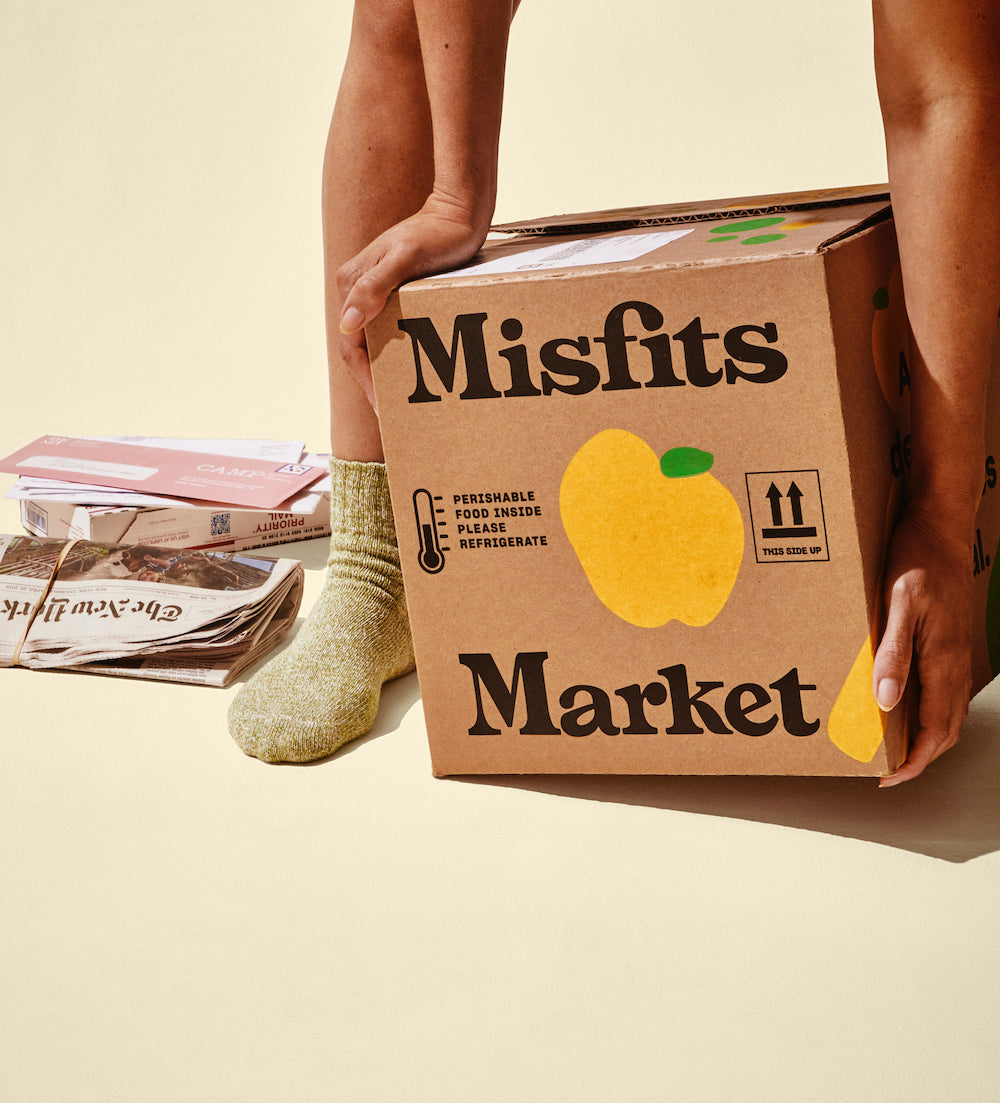
The cardboard shipping package for Misfits products is 100% recyclable. Eagleson says they are testing out different eco-friendly insulation solutions that both help the environment, and deliver an unbroken, usable product to the buyer. The paper-based insulation is filled with air and is covered with a film exterior that can be recycled with other plastics. Misfits Market also uses a plant-based bag made of resin instead of the plastic produce bags that are often used in, say, grocery stores. These bags are fully compostable.
But climate is an issue when shipping produce with eco-friendly materials. If those materials are meant to be composted, much like vegetables or fruit are, Misfits Market needed to come up with a plan that services different climates and not simply the Northeast United States where they are based.
“In the Northeast, we're subject to temperature extremes in both directions depending on the season, but it's fairly easy to plan for that if the temperature stays consistent,” Eagleson says. She says that as Misfits Market has expanded its delivery area, it’s had to make sure any box can stay fresh through multiple climate zones. “Even in the winter, for example, a box heading to Miami starts out at our New Jersey fulfillment center, where outside temperatures may be below freezing at pick up, but by the time it reaches a delivery truck in South Florida, the external temperatures could be tropical. This requires creative solutions that account for these variances.”
Although Misfits Market is trying to find solutions for nearly every part of their supply chain, they realize they are simply one part of the process. The food sourced is often packaged up before getting to the brand, which happens at the farm level.
“While we try to work with our partners and discourage plastic use, that's just sort of the way [the fruit and vegetables are] when they get to us. We get it in bulk,” Eagleson says. “We use biodegradable, home compostable green bags. They're going to biodegrade much faster than plastics.”
Eagleson hopes that consumers have a shift in perspective which will further inform their buying choices. “As people get [their fruit and vegetables] and it feels like [it] was rescued and destined just for you like a little adopted misfit, people also become more conscious about the way that they dispose of that,” she says. “Once there is one bit of awareness, you see a lifestyle change, an orientation towards sustainability, and it can be a really great trigger for people who wouldn't have had that exposure before.”
To stay in step with their consumer, the company is transparent with where it needs to be and what steps it is taking to get there. In a landscape where sustainability is now trendy, it’s easy to fall into greenwashing, so clarity on the process, the struggles, and the successes are just as impactful to a consumer as is a sustainable shift. They want to demonstrate to consumers that they actually care about the process, not just sales.
Consciously consuming household goods with sustainable packaging
Home goods, because of their necessity in day-to-day life, are easily forgotten in the sustainability movement. Think of all the single-use, everyday products consumers use at home: plastic wrap, cotton swabs, and menstruation products, just to name a few. All of these add up, and end up as waste.
Changing a buyer’s relationship to these products is what A Good Company aims to do. “The way we tried to differentiate ourselves on the brand and the company is to basically develop, design, manufacture, and sell sustainable everyday products,” says founder and CEO Anders Ankarlid. “What we do with each product is moving from mindless consumption. We have to be very conscious of all the details.”
He’s encouraged by how the brand tinkers and tests products and its shipping packages. It takes months of development and potentially three months of failures to sift through, Ankarlid says with a laugh. Still, in its infancy (the brand only launched at the beginning of 2019), they have made a lot of impressive leaps and remain unwavered in their pursuit of both environmental responsibility and consciously consuming products. “It's not fair for the environment since the environment pays for all of this,” Ankarlid says.
Packaging solutions are a cornerstone of A Good Company. In fact, on the About Us section of the site, a landing page titled “Changing ecommerce together” focuses on packaging solutions as the turning point for brands to become sustainable.
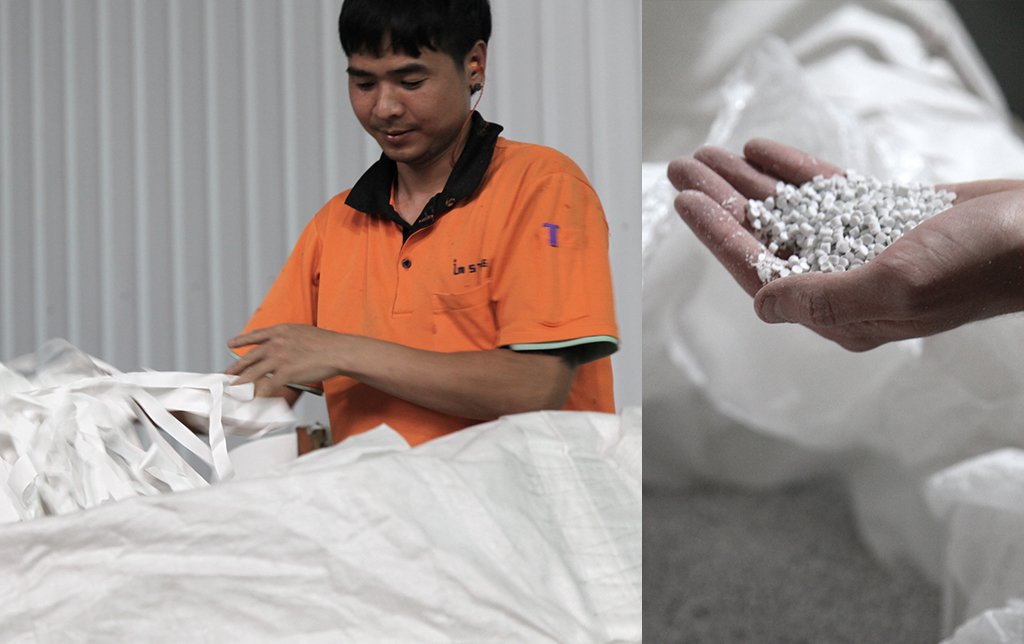
A Good Company uses stone paper for its packaging. It’s built without any tape (there’s a video to explain it.) The brand admits on its website that stone paper isn’t a perfect solution, but it’s a start.
“We can use the same packaging as we used for all our notebooks, all our personal care,” Ankarlid says. “But we just have to find and develop a little insert so the product itself doesn't hit the borders of the box so we don't have any new cost for developing a new box. We only have to focus on doing the inserts.”
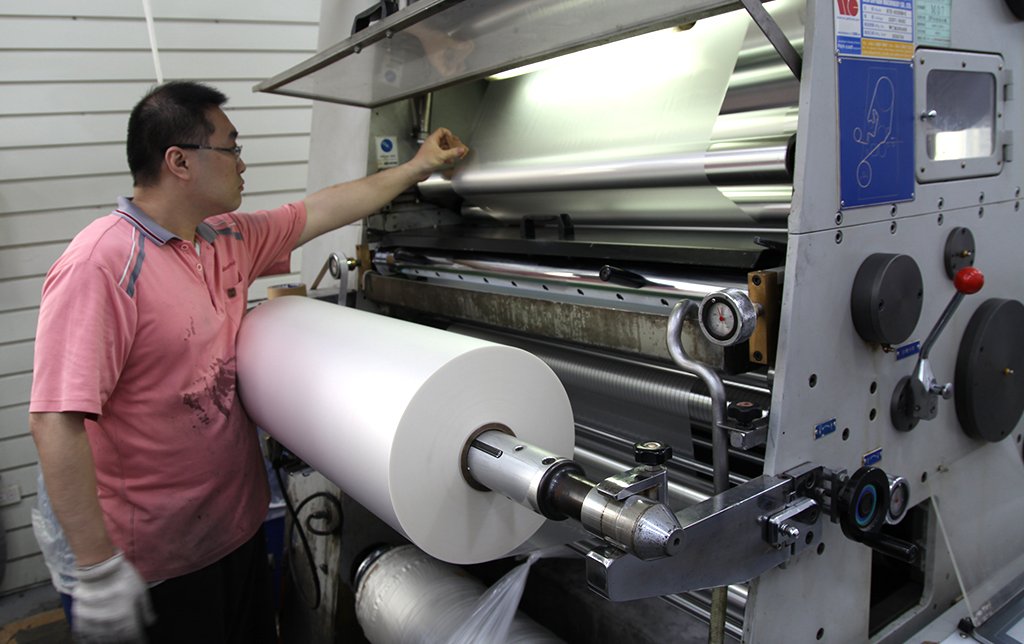
Packaging solutions are so central to the brand that they even sell their packaging to other companies. When it comes to the environment, everyone's a winner in the fight against climate change, and A Good Company is inviting other businesses to fight this battle with them.
Ankarlid also tells me that his customers reuse the packages their products come in, thus fulfilling a circle of sorts. Rather than recycling them, which they are totally capable of doing, they can be used as storage in someone’s house. Aesthetically, they are pleasing in their simple design, but wholly efficient. “For example, with the bottles, we should basically have a defined second purpose. It could be used in the bathroom [or] kitchen or so on and so forth.”
Learn more: Black Friday ecommerce strategies, tips, and statistics
What’s next?
There is, of course, so much to be done to help undo and stop climate change, and packaging is one piece of the puzzle. If a brand isn’t yet able to reinvent how its products are made, starting with eco-friendly packaging can be an easy first step to test the market.
Rather than buying into sustainability as simply a trend, soon, using eco-friendly materials will no longer be a competitive differentiator, but a baseline expectation shoppers have of the brands they support. When it comes to sustainability, your brand, and the planet depends on it.

