Shopify vs HostGator
Shopify vs HostGator 2026 - Which Web Hosting is Right for You?
Shopify provides merchants with cloud-based hosting for all merchants so you can count on a reliable uptime. All Shopify merchants get unlimited bandwidth and products.
You agree to receive Shopify marketing emails.
Why Choose Shopify vs Hostgator
| Key features | HostGator | Shopify |
|---|---|---|
| Plan and renewal pricing | HostGatorIntro price for the first term only, then renews at the regular rate: Hatchling from $10.99 USD/month and Online Store from $24.95 USD/month, billed upfront¹ | ShopifyBasic from $29.00 USD/month billed yearly, with no setup fees² |
| Hosting | HostGatorShared hosting sized by plan: Hatchling covers 10 websites, 10 GB of SSD storage, and about 40,000 visits a month¹ | ShopifyUnlimited web hosting and bandwidth on every plan² |
| Uptime | HostGator99% uptime guarantee on Web Hosting plans¹ | Shopify99.9% platform uptime during the biggest flash sales and events of the year³ |
| SSL certificate | HostGatorFree Let’s Encrypt SSL certificate¹ | ShopifyFree SSL certificate on every plan² |
| Site protection | HostGatorServer firewall, mod_security rules, and DDoS protection, with malware scanning on Web Hosting plans; keeping your site malware-free and its apps updated is your job¹ | ShopifyShopify hosts and secures the platform for you, and Shopify Plus adds bot protection for traffic-heavy flash sales⁴ |
| Payment card security (PCI DSS) | HostGatorShared and reseller servers don’t support PCI compliance; VPS and dedicated servers can, but aren’t set up for it by default¹ | ShopifyCertified Level 1 PCI DSS compliant, so every store is PCI compliant by default⁵ |
| Ecommerce setup | HostGatorOnline Store plans run WordPress with WooCommerce, with store features from YITH plugins¹ | ShopifyOnline store and checkout built in; Shopify Checkout converts up to 17% better than WooCommerce⁶ |
| Transaction and card fees | HostGatorSet by the payment provider you add¹ | ShopifyIn the US: no extra transaction fee with Shopify Payments, and 2% on Basic with a third-party provider² |
| Apps and integrations | HostGatorWordPress plugins, with Yoast SEO included¹ | Shopify21,000+ apps in the Shopify App Store⁷ |
| Support | HostGator24/7 phone and live chat for hosting questions¹ | Shopify24/7 support on every plan² |
| Migration | HostGatorFree tool for moving WordPress sites to HostGator¹ | ShopifyFree Store Migration app for WooCommerce products and customers, plus URL redirects⁸ |
Sources: ¹ HostGator’s Hosting Price Chart (November 2026), Web Hosting page (October 2026), eCommerce Hosting page (September 2026), and help articles on PCI compliance and server security (November 2026). ² Shopify pricing page (shopify.com/pricing). ³ Shopify platform data. ⁴ Shopify’s scalability guide (shopify.com/enterprise/blog/scalable-ecommerce-platform). ⁵ Shopify security page (shopify.com/security). ⁶ Shopify checkout study, completed with a Big Three global management consulting firm. ⁷ Shopify App Store count as of December 31, 2025. ⁸ Shopify Help Center.
Start selling with Shopify today
Try Shopify for free, and explore all the tools and services you need to start, run, and grow your business.
10 Things Shopify Can Do vs HostGator
99.9% platform uptime, even during flash sales
Shopify has 99.9% platform uptime during the biggest flash sales and events of the year. Your store runs on Shopify’s cloud servers, so traffic to other websites doesn’t use up its capacity. HostGator’s Web Hosting plans are shared hosting, where many websites share one server’s resources, according to its Web Hosting page as of October 2026.
Free subdomain
When comparing Shopify vs. HostGator, Shopify offers a forever free subdomain with each subscription. You can choose to run your website on this subdomain for years. Your website will be yourbusinessname.myshopify.com. Since Shopify has great brand recognition, this subdomain can add trust. If you decide to purchase your own domain name you can do so using Shopify’s Domain Name Generator. HostGator includes a free domain for the first year with a 12-, 24-, or 36-month plan, and the domain then renews at the regular rate, according to its Web Hosting page as of October 2026.
Free trial
Unlike HostGator, Shopify provides all merchants with a free trial. During this free trial, you won’t be charged. If you decide Shopify isn’t right for you, you can close your Shopify store from your Shopify admin without contacting support. During your free trial, you’ll be able to customize your website, add products, and even make your first sale. HostGator bills the plan’s full term upfront and offers a 30-day money-back guarantee on hosting fees, which doesn’t cover renewals, monthly terms, or domain fees, according to its Web Hosting page as of October 2026.
Unlimited bandwidth
Shopify provides unlimited bandwidth to all merchants on any plan. Hostgator’s bandwidth is unmetered like Shopify’s. On Shopify, you can both download and upload data as much as needed with no time limits.
Built-in email marketing
HostGator sells custom email addresses through its Professional Email add-on, which renews at $2.99 USD a month after a one-month free trial, according to its Web Hosting page as of October 2026. Shopify doesn’t host mailboxes, so you’d connect a third-party email host for those. Shopify includes Shopify Messaging, so you can send up to 10,000 marketing emails a month to your customers for free. You’ll be able to design, send, and analyze every email you send using Shopify Messaging. You’ll find ready-made designs to choose from that’ll be sent from your own domain so you can earn sales promoting your products.
Premium theme designs
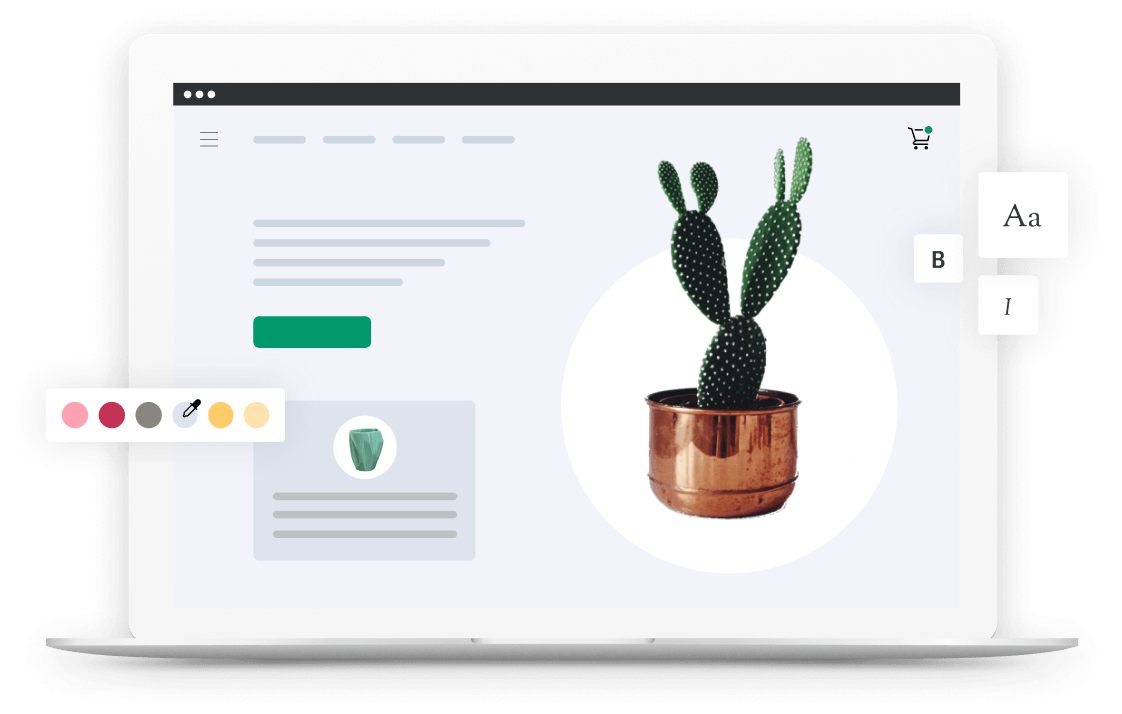
Both Shopify and Hostgator provide their customers with ready-made theme templates. All of Shopify’s themes are mobile-responsive, modern, and easy to customize. You’ll be able to make changes to typography, colors, images, and more using Shopify’s easy to use theme editor. Shopify’s Theme Store includes both free and premium versions of templates to suit both your budget and needs.
Basic plan from $29.00 USD/month, billed yearly
Both Shopify and HostGator have tiered pricing plans, so you can add features as your business grows. HostGator’s shared Web Hosting has three plans, Hatchling, Baby, and Business, and its eCommerce Hosting has two, Online Store and Online Store + Marketplace, according to its Hosting Price Chart as of November 2026. Shopify’s Basic plan is $29.00 USD/month billed yearly, and you can compare every plan on the pricing page.
Fully hosted
Shopify’s hosting is reliable and fast. On Shopify, you'll have unlimited email forwarding, automatic updates, your own custom domain, and a content delivery network. Shopify provides unlimited bandwidth. There are no extra fees for hosting needed when on a Shopify subscription.
24/7 support, wherever you are
Shopify support is available 24/7, no matter where you are. You’ll also have access to help docs, webinars, blog posts, and online courses to guide you along the way. HostGator offers 24/7 phone and live chat support for hosting questions, with a separate phone line for international customers, according to its website as of October 2026.
Servers around the world
Shopify serves your store through a content delivery network with servers around the world, to help provide you with the best uptime, connection, and speed for your website. HostGator includes a free Cloudflare content delivery network on its shared Web Hosting plans, according to its Web Hosting page as of October 2026.
Why Merchants Prefer Shopify vs Hostgator
Powering millions of merchants in 175+ countries
Millions of merchants in more than 175 countries sell on Shopify, from a small but growing business to a large enterprise with millions of monthly website visitors. The reliability of your uptime won’t be affected based on how much traffic your website receives. HostGator sizes its shared Web Hosting plans by traffic, starting at about 40,000 visits a month on Hatchling, so a busier site needs a bigger plan, according to its Web Hosting page as of October 2026.
Unlimited products on all plans
On Shopify, you can add an unlimited number of products no matter what plan you choose. Since you also have access to unlimited bandwidth, there are no data uploading issues that will affect you from increasing the amount of inventory you add to your website. HostGator’s Online Store plans also list unlimited products, with SSD storage capped by plan: 50 GB on Online Store and 100 GB on Online Store + Marketplace, according to its eCommerce Hosting page as of September 2026.
No upselling
When looking at Shopify vs. HostGator, every Shopify plan includes hosting, an SSL certificate, and your online store, so you don’t need to buy extra products to start selling. You won’t have sales reps asking you to change your plan. HostGator sells extras such as Professional Email and its HostGator Malware Protection plan separately, according to its website as of October 2026.
PCI-compliant
All Shopify stores are PCI compliant by default, which is the security standard required for those handling credit and debit card information. Shopify is certified Level 1 PCI DSS compliant, which extends to your Shopify store too. To maintain compliance, Shopify completes an annual PCI DSS assessment to keep your store secure. HostGator’s shared and reseller servers don’t support PCI compliance, and its VPS and dedicated servers support it but aren’t configured for it by default, according to HostGator’s help article on PCI compliance as of November 2026.
Grow within your plan
On Shopify you can grow your business as big as you need to, to meet your customers’ needs. While you can gain access to new features with plans catered for bigger businesses, you don’t need to change your plan account. You can grow your business on any plan since Shopify hosting is cloud-based for all merchants. HostGator’s shared Web Hosting plans are sized by expected traffic, so you may need a bigger plan, or a VPS or dedicated server, as your site gets busier, according to its Web Hosting page and Hosting Price Chart as of November 2026.
Cloud hosting for all
Shopify provides cloud hosting for all merchants, included in every plan. HostGator’s Web Hosting plans are shared hosting, and it sells VPS and dedicated servers at higher prices for sites that need more resources, according to its Hosting Price Chart as of November 2026.
We’ve been able to build something in 3 years that a lot of brands haven’t actually gotten to in 10 years.
Learn More About Shopify

Compare Shopify
See how Shopify compares to other platforms

Shopify Community
Learn from business owners on the Shopify forums

Shopify Help Center
Find answers to all your Shopify questions fast
Start selling with Shopify today
Try Shopify for free, and explore all the tools and services you need to start, run, and grow your business.
Shopify vs. HostGator FAQ
Shopify vs. HostGator: which is better for an online store?
Shopify is better for an online store if you want hosting, an SSL certificate, your store, and checkout in one plan, with the Basic plan at $29.00 USD/month billed yearly, according to the Shopify pricing page. HostGator is a web host whose Online Store plans run WordPress with WooCommerce and add store features through plugins, according to HostGator’s eCommerce Hosting page as of September 2026. Shopify Checkout converts up to 17% better than WooCommerce, according to a study Shopify completed with a Big Three global management consulting firm.
What’s the difference between Shopify and HostGator?
Shopify is a commerce platform that includes hosting, your online store, and checkout in one plan, while HostGator is a web host that sells shared, WordPress, VPS, dedicated, and eCommerce hosting for websites you build and manage yourself. Shopify’s plan features are on the Shopify pricing page, and HostGator’s plan types are on its Hosting Price Chart as of November 2026. A Shopify store doesn’t need separate hosting, so Shopify replaces HostGator’s hosting for your store.
Can I connect my HostGator domain to Shopify?
Yes, you can connect a domain registered with HostGator to Shopify and keep it registered with HostGator. In your HostGator DNS settings, point the A record and the
www CNAME record to the Shopify addresses in the Shopify Help Center, then click Connect existing domain under Settings > Domains in your Shopify admin. It can take up to 48 hours for the domain to go live. To manage the domain from Shopify instead, you can transfer it from HostGator to Shopify once it’s been registered for at least 60 days. Shopify doesn’t host email, so set up a third-party email host before you transfer. Since every Shopify plan includes hosting, you won’t need HostGator for hosting anymore.Is HostGator good for a Shopify store?
You don’t need HostGator to host a Shopify store, because every Shopify plan includes hosting, unlimited bandwidth, and an SSL certificate, according to the Shopify pricing page. HostGator can still be useful alongside Shopify. You can keep a domain registered with HostGator and connect it to your store, or keep a HostGator website and sell your products on it with the Buy Button.
Is Shopify cheaper than HostGator for ecommerce?
It depends on where you sell and what your store needs: on a yearly term, HostGator’s Online Store plan renews at $24.95 USD/month billed upfront, according to its Hosting Price Chart as of November 2026, and Shopify’s Basic plan is $29.00 USD/month billed yearly in your region. HostGator’s lower introductory prices apply to the first term only. Shopify’s plan includes hosting, an SSL certificate, your online store, and checkout, while HostGator’s store features come from WordPress plugins and its payments from a provider you add. Compare every plan on the Shopify pricing page.
What are the transaction fees on Shopify compared with HostGator?
In the US, Shopify charges no extra transaction fee when you use Shopify Payments, and a 2% fee on the Basic plan when you use a third-party payment provider, according to the Shopify pricing page. Card rates also apply, and rates and Shopify Payments availability vary by plan and country. HostGator’s Online Store plans list secure online payments but no processing rate of HostGator’s own, according to its eCommerce Hosting page as of September 2026, so your fees there come from the payment provider you add.
How do I move my website from HostGator to Shopify?
To move a WooCommerce store from HostGator to Shopify, export your products and customers from WooCommerce as CSV files and import them with Shopify’s free Store Migration app, according to the Shopify Help Center. Historical orders need a third-party migration app. WordPress blog posts and pages aren’t in WooCommerce exports, so add them in Shopify or move them with an app. You can also hire a Shopify Partner to run the migration.
Do I need to cancel HostGator after moving to Shopify?
You can cancel your HostGator hosting once your store is live on Shopify, because every Shopify plan includes hosting, according to the Shopify pricing page. Shopify doesn’t offer email hosting, so move any HostGator mailboxes to a third-party email host first, according to the Shopify Help Center. If your domain is registered with HostGator, you can keep it there and connect it to Shopify. HostGator charges a non-refundable $17.99 USD domain fee if you cancel a plan that came with a free domain within the first year, according to its Web Hosting page as of October 2026.
Will moving from HostGator to Shopify hurt my SEO?
It doesn’t have to, as long as you redirect each old HostGator URL to its matching Shopify URL, so visitors and search engines reach the new page instead of a broken link. In Shopify, you can create URL redirects one at a time or import them in bulk from a CSV file. Learn how to set up URL redirects in the Shopify Help Center.
Is Shopify better for SEO than HostGator?
Shopify builds core SEO features into every store, while HostGator’s plans rely on the free Yoast SEO plugin for WordPress. Shopify automatically creates a sitemap for your store, fills in page titles and meta descriptions from your product and collection names, and its free themes include structured data for product pages, according to Shopify’s SEO guide. HostGator includes Yoast SEO on its Web Hosting and Online Store plans, according to its website as of October 2026.
Can HostGator handle payments, inventory, and shipping like Shopify?
HostGator’s Online Store plans include secure online payments and unlimited products, and its Online Store + Marketplace plan adds multi-channel inventory, according to its eCommerce Hosting page as of September 2026. Store features on HostGator come from WordPress plugins. Every Shopify plan includes inventory management, plus Shopify Payments and shipping labels you buy and print from your Shopify admin in the countries where they’re available, according to the Shopify pricing page.
Does HostGator offer a POS system?
HostGator’s eCommerce Hosting page doesn’t list a point-of-sale (POS) system, as of September 2026. In the countries where Shopify POS is available, every Shopify plan lets you sell in person and accept payments with a phone or card reader, from the same Shopify admin as your online store, according to the Shopify pricing page. POS Pro adds more in-store features for a monthly fee per location.
Is Shopify or HostGator easier for a beginner?
Shopify sets up hosting, security, and checkout for you, and 78% of the 6,535 merchants in Shopify’s 2026 Merchant Pulse Survey built their own Shopify store, according to Shopify’s The Entrepreneur Effect report. On HostGator, your store runs on WordPress with WooCommerce and plugins. Its Online Store plans include a store creation process and automated WordPress updates, according to its eCommerce Hosting page as of September 2026.
Can I customize Shopify as much as a HostGator-hosted WordPress site?
Yes, Shopify can be customized at three levels: no-code changes in the theme editor, low-code changes with Liquid templates and metafields, and fully custom headless storefronts built with the Storefront API and Hydrogen, according to Shopify’s customization guide. Shopify Functions add custom backend logic for discounts and shipping through apps. Every plan uses the checkout editor, and deeper checkout customization requires Shopify Plus. On HostGator, you customize WordPress with themes, plugins, and code.
Which scales better for a fast-growing store, Shopify or HostGator?
Shopify runs every store on the same platform, which handled $14.6 billion in merchant sales during Black Friday Cyber Monday 2025 and peaked at 489 million requests per minute, according to Shopify’s scalability guide. You don’t move servers as your traffic grows. HostGator sizes its shared Web Hosting plans by traffic, starting at about 40,000 visits a month on Hatchling, and sells VPS and dedicated servers for busier sites, according to its Web Hosting page and Hosting Price Chart as of November 2026.
Can I use Shopify with my HostGator website?
Yes, you can keep your website on HostGator and sell your Shopify products on it with the Buy Button sales channel, which adds buy buttons to an external website or blog, according to the Shopify pricing page. You manage products, orders, and payments in your Shopify admin. Learn how to set it up in the Shopify Help Center.
What’s the best commerce platform for you?
Learn why thousands of businesses migrate to Shopify every year.