Shopify vs Webflow
Shopify or Webflow?
Shopify offers high-quality ecommerce features, POS, native mobile app, and analytics to help you efficiently run an online store.
You agree to receive Shopify marketing emails.
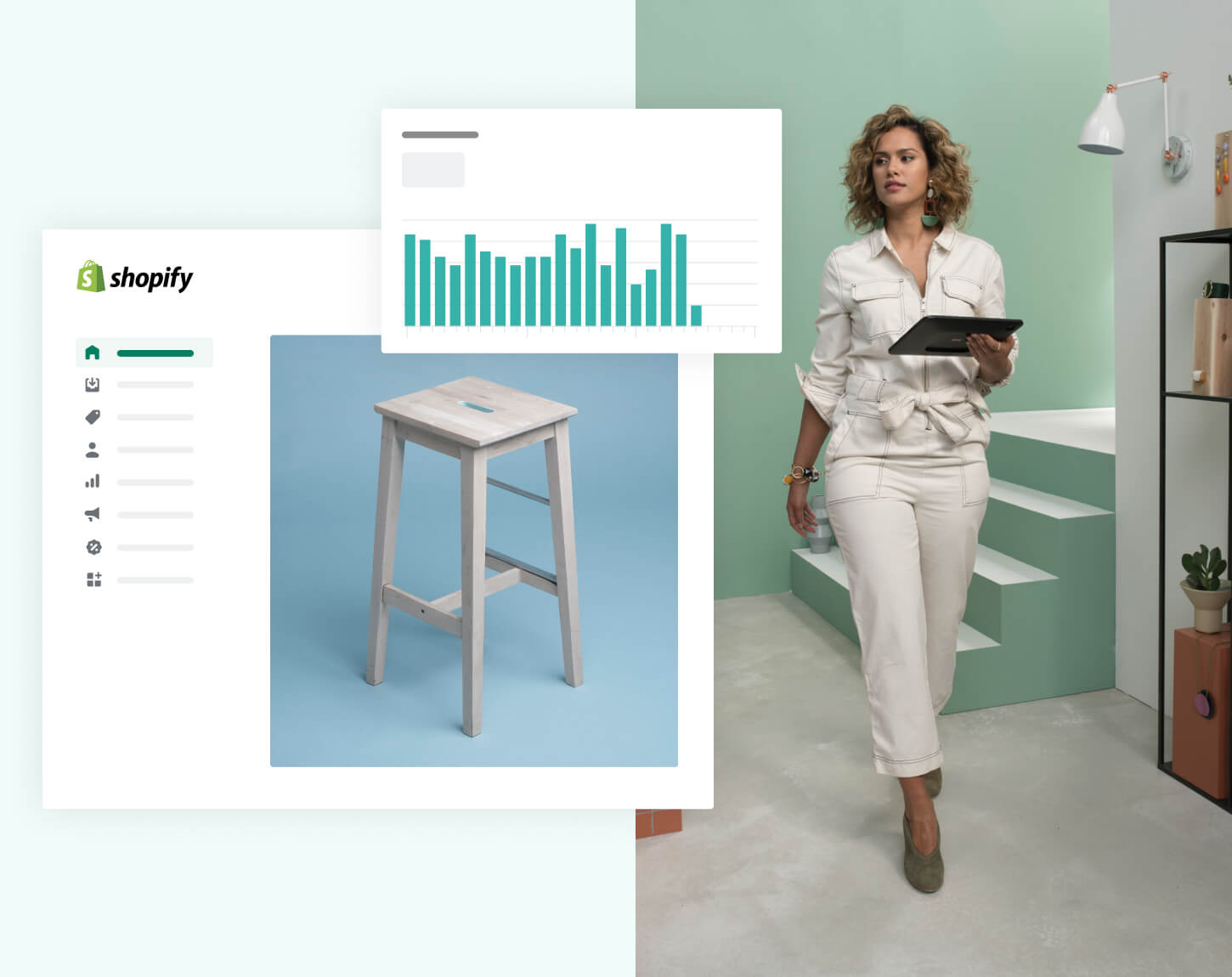
Shopify vs. Webflow: unlimited products or up to 15,000 items
| Key features | Webflow | Shopify |
|---|---|---|
| Best suited for | WebflowWebsites, with separate ecommerce plans for online retailers | ShopifySelling online, in person, and on social channels from one admin |
| Ecommerce plans and prices | WebflowStandard, Plus, and Advanced: $29, $74, and $212 per month billed yearly, per site | ShopifyBasic, Grow, Advanced, and Plus, with no setup fees |
| Product limit per plan | Webflow500, 5,000, or 15,000 ecommerce items by plan, including variants and categories | ShopifyUnlimited products on every plan |
| Transaction fees per sale | Webflow2% on Standard, 0% on Plus and Advanced, plus Stripe or PayPal processing fees | ShopifyNone with Shopify Payments; 2% on Basic with a third-party provider |
| Payment options at checkout | WebflowStripe, PayPal, and Apple Pay or other browser payments | ShopifyShopify Payments, or over 100 third-party providers |
| Web hosting and bandwidth | Webflow50 GB bandwidth on Standard, 100 GB on Plus and Advanced, on a global CDN | ShopifyUnlimited web hosting and bandwidth on every plan |
| Custom domains and subdomains | WebflowFree webflow.io subdomain, or publish to a custom domain | ShopifyFree .myshopify.com subdomain, or connect your own domain |
| SSL certificate for your domain | WebflowSSL enabled by default on Webflow-hosted sites | ShopifyFree TLS/SSL certificate for every domain you add |
| Themes and templates | Webflow7,000+ free and premium templates | Shopify24 free themes, plus paid themes, in the Shopify Theme Store |
| Visual design editor | WebflowWebflow Designer, a visual canvas for building pages | ShopifyTheme editor for customizing your store without code |
| Built-in SEO tools | WebflowTitle tags, meta descriptions, 301 redirects, and sitemap controls | ShopifyAutomatic sitemap.xml and up to 100,000 URL redirects below Plus |
| Blog and content management | WebflowCMS for blog posts: 2,000 items on Standard, up to 10,000 on Plus and Advanced | ShopifyBuilt-in blogging engine in every online store |
| Apps and integrations | WebflowMeta, Google Shopping, and Mailchimp integrations on ecommerce plans | Shopify21,000+ apps in the Shopify App Store as of December 31, 2025 |
| Built-in AI tools | WebflowWebflow AI generates text drafts and CMS items | ShopifySidekick, an AI commerce assistant in the Shopify admin |
Sources, checked October 2026: Webflow’s pricing page (webflow.com/pricing) for plans, item limits, fees, payments, hosting, domains, editor, SEO, CMS, integrations, and AI; Webflow’s templates page (webflow.com/templates) for templates; the Webflow Help Center for SSL. Shopify’s pricing page (shopify.com/pricing) for plans, products, fees, hosting, and SSL; the Shopify Help Center for payments, domains, editor, SEO, blog, and Sidekick; the Shopify Theme Store for themes. Shopify App Store count as of December 31, 2025.
Start selling with Shopify today
Try Shopify for free, and explore all the tools and services you need to start, run, and grow your business.
10 Things Shopify Can Do vs Webflow
Offer a free subdomain
Shopify offers a free subdomain on .myshopify.com to every user. If you want a custom domain name, you can register one on Shopify or connect one you already own, and use the domain name generator to come up with ideas for your business. Webflow sites can publish to a free webflow.io subdomain or to a custom domain you own.
Add unlimited products
Webflow's ecommerce plans allow 500, 5,000, or 15,000 ecommerce items, including variants and categories, depending on the plan. Shopify doesn't limit the number of products on any plan, and its inventory tools let you track, view, and adjust your stock.
Dropship with Shopify apps
The Shopify App Store has dropshipping apps that let you sell products without holding inventory, so you can add products from suppliers to your Shopify store.
21,000+ apps to expand your store
There are 21,000+ apps in the Shopify App Store as of December 31, 2025. You'll find apps to improve your product pages, run loyalty programs, chat live with customers, and more.
Sell everywhere
Shopify connects with platforms including Instagram, Facebook, Walmart, Etsy, Amazon, TikTok, and Pinterest, so you can sell where your customers shop. Shopify keeps one product inventory synced across all the channels you sell on through Shopify.
Recover abandoned carts
Shopify offers abandoned checkout recovery on all its plans. Reviewing abandoned checkouts can help you find patterns in why customers leave without completing a purchase, and you can set up emails that send customers a link back to their cart.
Improve payment experience
Webflow accepts payments through Stripe, PayPal, and Apple Pay or other browser-based payment methods, with a 2% transaction fee on its Standard ecommerce plan. Shopify has its own payment processor, Shopify Payments, built into the platform, and charges a third-party transaction fee only if you use a different payment provider.
Unify online and in-store sales
Shopify offers a first-party POS system that lets you unify all your sales in one place. Using Shopify for both your online and brick-and-mortar store, you can keep inventory synced, keep track of payments, and offer options like in-store pickup and ship to customer.
Scale your online store
Aiming to build a recognizable ecommerce brand? You can count on Shopify to offer you the tools and support you need. Shopify stores are scalable, meaning you can start out small and grow into an enterprise-level brand. Larger brands can use Shopify’s enterprise platform, Shopify Plus, to manage high traffic volume and sales spikes.
Brand your business
Shopify isn’t just an ecommerce platform. It’s a complete toolbox for building and branding your business. Whether you want to design a custom logo, create a promotional video, or generate a slogan, Shopify has you covered with free business tools.
Why Merchants Prefer Shopify to Webflow
Built for ecommerce
Shopify is built for commerce, with an online store, checkout, payments, and point of sale on one platform. Webflow sells ecommerce as separate site plans for online retailers.
Free themes
Shopify offers free and paid website themes that you can customize without writing code.
Smooth shipping
Shopify lets you calculate shipping and buy and print labels directly from your Shopify admin.
Various marketing tools
Gift cards, automatic discounts, Shopify Messaging, a blogging CMS—Shopify offers a range of marketing tools to help you provide an excellent shopping experience to your customers.
24/7 customer support
Shopify support is available 24/7 on every plan, with live chat on Basic.
Mobile app
Shopify offers a mobile app that lets you manage products, orders, customers, and staff from your iPhone or Android device.
Built-in fraud detection
With Shopify Payments, Shopify's built-in fraud analysis helps you identify suspicious orders.
Detailed reports
Shopify offers a variety of performance reports, such as product reports and finance reports, in your Shopify admin.
99.9% uptime for product launches
Shopify includes hosting built to handle large traffic spikes, which matters for keeping your online store running during important product launches.
International expansion
As Shopify enters more markets, it’s also scaling its resources for global commerce. Shopify merchants can offer a smooth buying experience to local customers with localized stores and multiple currencies. The Shopify App Store also has apps to help you sell like a local on channels like WeChat and WhatsApp.
We’ve been able to build something in 3 years that a lot of brands haven’t actually gotten to in 10 years.
Learn More About Shopify

Compare Shopify
See how Shopify compares to other platforms

Shopify Community
Learn from business owners on the Shopify forums

Shopify Help Center
Find answers to all your Shopify questions fast
Start selling with Shopify today
Try Shopify for free, and explore all the tools and services you need to start, run, and grow your business.
Shopify vs. Webflow FAQ
What is the difference between Shopify and Webflow?
Shopify is a commerce platform, while Webflow is a website builder that sells ecommerce as separate plans. Every Shopify plan includes unlimited products, checkout, and in-person selling, according to Shopify’s pricing page. Webflow’s ecommerce plans allow 500, 5,000, or 15,000 ecommerce items depending on the plan, according to Webflow’s pricing page (webflow.com/pricing) as of October 2026.
Which is better: Webflow or Shopify?
Shopify is the better choice when selling is the core of your business, and Webflow is a good choice for design-led websites with a smaller catalog. Every Shopify plan includes unlimited products, gift cards, and discounts, built-in fraud analysis is available with Shopify Payments, and Buy Buttons let you sell on other websites. Webflow’s largest ecommerce plan, Advanced, allows 15,000 ecommerce items, according to Webflow’s pricing page (webflow.com/pricing) as of October 2026.
Which is cheaper: Webflow or Shopify?
Which is cheaper depends on the plan you need: Webflow’s ecommerce plans cost $29, $74, and $212 per month billed yearly for Standard, Plus, and Advanced, in USD per site, as of October 2026, according to Webflow’s pricing page (webflow.com/pricing). Shopify’s plan prices are on the Shopify pricing page. Shopify plans have no product limit, while Webflow’s Advanced ecommerce plan allows up to 15,000 ecommerce items.
What are the transaction fees on Shopify and Webflow?
Shopify charges no transaction fee when you use Shopify Payments, and 2% on Basic, 1% on Grow, 0.6% on Advanced, or 0.2% on Plus when you use a third-party payment provider, according to Shopify’s pricing page. Webflow charges a 2% transaction fee on Ecommerce Standard and 0% on Plus and Advanced, in addition to Stripe or PayPal processing fees, according to Webflow’s pricing page (webflow.com/pricing) as of October 2026.
Does Shopify or Webflow have more payment options?
Shopify has more: you can use Shopify Payments or choose from over 100 third-party payment providers, according to the Shopify Help Center. Webflow accepts payments through Stripe, PayPal, and Apple Pay or other browser-based payment methods, according to Webflow’s pricing page (webflow.com/pricing) as of October 2026.
Can Webflow handle a large ecommerce site, or should I use Shopify?
Webflow caps its largest ecommerce plan, Advanced, at 15,000 ecommerce items, and that count includes variants and categories, according to Webflow’s pricing page (webflow.com/pricing) as of October 2026. Shopify has no product limit on any plan, according to Shopify’s pricing page.
Can I use Shopify Buy Buttons on a Webflow site?
Yes: create a Buy Button in Shopify and add its embed code to a Webflow page with Webflow’s custom code feature, which works on your entire site or individual pages. The Buy Button sales channel is included in all Shopify subscription plans, according to the Shopify Help Center.
How do I migrate from Webflow to Shopify?
Import your products first, then your customers, and then your historical orders, so Shopify can connect each order to its products and customers. Products and customers can move with CSV files or a migration app, and historical orders move with a migration app from the Shopify App Store or a custom solution built with a Shopify Partner, according to the Shopify Help Center.
What happens to my Webflow URLs and SEO when I move to Shopify?
Redirect your old Webflow URLs to their new Shopify pages to help preserve your search rankings. Shopify supports up to 100,000 URL redirects on plans below Plus and 20,000,000 on Plus, according to the Shopify Help Center.
Shopify vs. Webflow: which has better security?
Both Shopify and Webflow include free SSL. Shopify also includes built-in fraud analysis with Shopify Payments, which helps you review suspicious orders and avoid chargebacks.
How do Webflow and Shopify handle tax calculations?
Both calculate sales tax and VAT automatically at checkout. Webflow’s ecommerce plans include automatic sales tax and VAT calculation, according to Webflow’s pricing page (webflow.com/pricing) as of October 2026. Shopify calculates sales tax and VAT automatically too, and you can set up manual tax rules for specific regions. Shopify also calculates shipping rates and lets you offer free shipping above a price you set.
What’s the best commerce platform for you?
Learn why thousands of businesses migrate to Shopify every year.